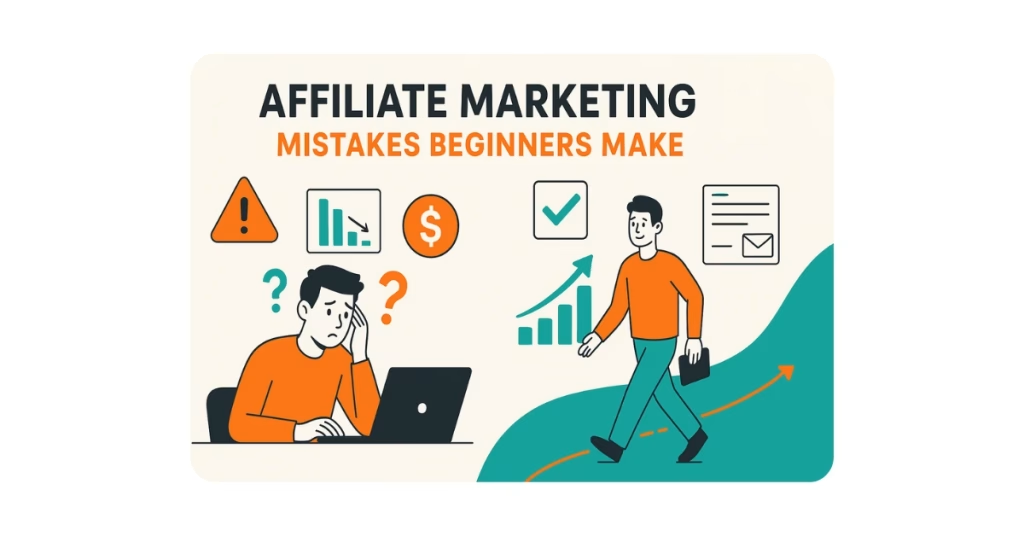
When I first jumped into affiliate marketing, I had no clue what I was doing. No SEO knowledge. No idea how to choose products. I just thought, if others can do it, why can’t I?
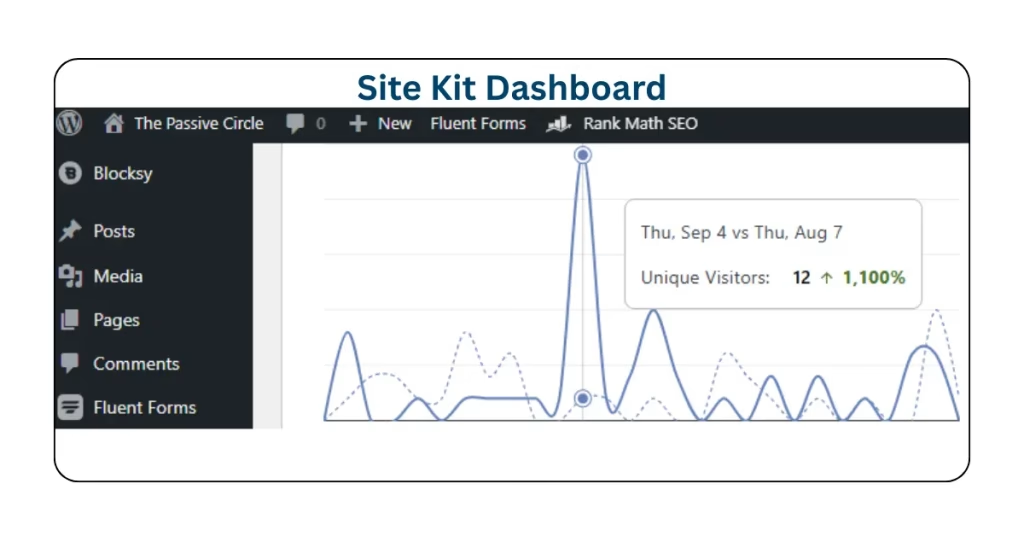
But reality hit hard. I’d publish blog posts, share them on social media, and… nothing. No clicks. No visitors. Some days, not even a single view. The frustration was real. Once, I tweaked an old post out of desperation; suddenly, 12 people landed on it at once. It felt like winning a race, but it also showed me how easy it is to waste time if you don’t know what you’re doing.
If you’re starting out, you don’t need to repeat the same mistakes. That’s why in this guide, I’ll point out the 10 biggest affiliate marketing mistakes beginners make and show how to avoid them using my own lessons. These are the lessons that save you time, frustration, and missed commissions. Let’s dive in and make your affiliate journey smoother from the start.
If you’re just starting out, this guide will save you months of confusion and help you focus on what actually works.
Here’s what we will cover next
Table of Contents
Before we dive into those mistakes, let’s have a look at why beginners struggle with affiliate marketing.
Why Beginners Struggle with Affiliate Marketing
Affiliate marketing looks simple from the outside. You pick a product, share your link, and wait for commissions to roll in. At least, that’s what most tutorials and YouTube videos make it seem.
But here’s the truth: the failure rate is high. Some studies suggest that over 90% of beginners quit within the first year. Not that affiliate marketing fails, but people continue to fall into the same traps.
I’ve seen plenty of stories about affiliate marketing gone wrong. Blogs with no traffic because they skipped SEO. Social media accounts are pushing random links that nobody clicks. Beginners spend months creating content that does not convert. This happens because they choose the wrong niche.
And I’ve lived some of those mistakes myself. Like writing blog posts without even checking if people searched for those topics. Or promoting products I barely knew about, just because they had a high commission rate. Spoiler: none of that worked.
The good news? Most of these struggles come from simple, avoidable mistakes. Watch for key signs to save time and avoid wasted effort. This way, you can build something that lasts.
Here are the 10 common affiliate marketing mistakes beginners make and how to avoid them.
10 Affiliate Marketing Mistakes Beginners Make (and How to Avoid Them)
Mistake 1 – Choosing the Wrong Niche
One big affiliate marketing mistake beginners make is choosing the wrong niche. It sounds simple, pick something popular, right? But here’s where most people get stuck:
- They pick a niche that’s way too broad, like “health” or “making money online.” Competing with authoritative sites is nearly impossible for a beginner.
- They choose something only because it looks profitable, even if they do not care about it.
- Or they jump into a niche they don’t understand and end up running out of content ideas.
I fell into this trap, too. At first, I started with the “affiliate marketing” niche itself. It’s one of the most competitive spaces out there. Big-budget giants lead the rankings. For a newcomer like me, it felt like climbing Mount Everest in flip-flops.
Luckily, I realized this mistake early. I shifted to a more specific niche: “affiliate marketing for beginners.” This change mattered a lot. It let me focus on helping others like me, beginners who want to leave the 9–5 grind and create a financially free life.
The Fix: How to Spot a Low-Competition Niche
Here’s a simple process you can use before committing to any niche:
- Search Your Keyword in Google
- Type in your target keyword. Example: “best fitness apps for seniors”.
- Look at who’s ranking.
- Check Domain Authority (DA)
- Use free tools like MozBar or Ahrefs free checker.
- If the top 10 results are all DA 70+ giants (Forbes, Healthline, HubSpot), the niche is likely too competitive.
- If you see smaller blogs with DA under 40 ranking, that’s a green light.
- Analyze Content Type
- Are results mostly forums, Quora answers, Reddit threads, or niche blogs?
- If yes, it means Google doesn’t have enough strong content — an opportunity for you.
- If it’s all polished guides from authority brands, reconsider.
- Look for Long-Tail Angles
- Focus on “best free fitness apps for seniors with arthritis” rather than just “fitness apps.”
- Long-tail keywords have less competition but more focused search intent.
- Use Idea Sources
- Reddit & Quora → See what real people are asking.
- AnswerThePublic → Discover long-tail keyword questions.
- Ubersuggest → Check search volume + SEO difficulty before committing.
Focus on “keto recipes for busy moms” or “plant-based diets for diabetics.” Skip the broad term “weight loss.” These smaller niches often have active audiences but less competition.
Don’t just pick a niche because it sounds profitable. Research it. If authority giants dominate page one, walk away. Your goal is to find a niche where your voice has room to grow.
Choosing the right niche is the foundation of your affiliate journey. If you start wrong, everything else becomes harder. Get this right, and you’ll save yourself months (or even years) of wasted effort.
Mistake 2 – Promoting Poor-Quality Products
A common mistake in affiliate marketing is chasing high commissions. But it’s important to check the product’s real value first. On paper, it feels smart; why not promote something that pays $100 per sale instead of $10?
Here’s the problem:
- If the product is low quality, people won’t trust your recommendations again.
- You might earn a quick sale, but you lose long-term credibility.
- Promoting products you don’t use or understand makes your content sound hollow.
I made this mistake early on. I once promoted a tool I didn’t research much. I chose it because someone else reviewed it, and the commission seemed attractive. But when I looked deeper, I realized the product wasn’t as good as it claimed. That was a wake-up call. I only recommend tools I’ve tested or researched on trusted sites and tutorials.
The Fix:
- Test products yourself whenever possible. Even the free trial gives you insights you can’t get from a sales page.
- Read multiple reviews, not just one. Check what real users are saying on platforms like Trustpilot, Reddit, or YouTube.
- Think about your audience first. If you wouldn’t recommend it to a friend, don’t recommend it to your readers.
Your audience’s trust is your biggest asset. Promote products that provide genuine value. Don’t focus on those that promise the biggest payout.
Mistake 3 – Promoting Too Many Products at Once
When you’re new, it’s tempting to promote every product you hear about. I get it: more products, more chances to earn, right? But this is another classic affiliate marketing mistake.
Here’s why it backfires:
- Readers get confused. If your blog post lists ten different tools for the same problem, beginners don’t know which one to choose.
- Your trust gets diluted. If you seem to recommend everything, it looks like you only care about commissions.
- You overwhelm yourself. Managing links, banners, and tracking for dozens of products becomes a full-time headache.
I’ve been there. In the beginning, I signed up for many affiliate programs all at once. Instead of focusing, I spread my energy thin. The result? No clear message, and visitors left without taking action.
The Fix:
- Select 1–2 products that provide a solution to your audience’s problem.
- Focus on building content around those tutorials, comparisons, and case studies.
- Add more programs later once you have steady traffic and know what your readers want.
Less is more in affiliate marketing. Start with a small, strong toolkit of products your audience can trust, then expand when the time is right.
Mistake 4 – Ignoring SEO and Keyword Research
Many beginner’s affiliate marketing mistakes are writing content that isn’t in demand. You can write the most helpful article in the world, but if people can’t find it, it might as well not exist.
Here’s what happens when you skip SEO:
- Your posts don’t rank. They end up buried on page 10 of Google.
- You waste hours writing. But traffic stays at zero.
- You miss earning opportunities. No visitors = no clicks = no commissions.
I know this pain firsthand. When I started, I wrote whatever came to mind without any hesitation. I didn’t check search volume, CPC, or keyword intent. Honestly, I didn’t even know those terms! Almost no one viewed my posts, as I expected. It was a harsh lesson in affiliate marketing gone wrong.
The Fix:
- Try free tools like Ubersuggest, AnswerThePublic, or Google Keyword Planner. They help you uncover the genuine searches of people.
- Use long-tail keywords. Try using “best email marketing tools for beginners” instead of “email marketing.”
- Check search intent: Are people looking to buy, compare, or learn? Match your content to their intent.
SEO is not optional. Doing a bit of research before you write can save you weeks of frustration. It also helps attract readers who are eager to click on your links.
Mistake 5 – Creating Content That Doesn’t Help
A common affiliate marketing mistake is sharing shallow content. It often promotes too much and lacks real value. Beginners often think, “If I add my affiliate link everywhere, people will buy.” But the truth? That’s the fastest way to lose readers.
Here’s why it doesn’t work:
- Generic posts don’t stand out. If your article looks like a copy of 100 others, readers will bounce.
- Overly salesy content feels pushy. Nobody likes being sold to.
- Thin content doesn’t solve problems, so visitors don’t stick around.
I’ve fallen into this trap too. Early on, I wrote a few posts that were more about “promoting” than “helping.” No surprise, they got almost no engagement. Once I shifted to sharing tutorials, step-by-step guides, and real comparisons, things changed. People started reading, bookmarking, and coming back.
The Fix:
- Think value first, sales second. Help your reader solve a problem, then recommend a product in a way that feels organic and seamless.
- Create how-to guides, case studies, or comparison posts (e.g., “Tool A vs. Tool B”).
- Add your personal experience: what worked, what didn’t, and what you would do differently.
People follow and buy from you because you help them. Focus on being useful, and the commissions will follow naturally.
Most of these mistakes come from one thing.
Writing content without a clear structure.👉 I break this down step by step here:
How to Write Your First Affiliate Blog Post: Step-by-Step Guide for Beginners
Mistake 6 – Skipping Email List Building
One of the biggest regrets most beginners have (me included) is not starting an email list from Day 1.
When you only rely on SEO or social media, you’re building on rented land. Google updates, Facebook algorithms, all of that can change overnight. If you don’t own your audience, you’re always at risk of losing it.
I learned this the hard way. For months, I focused only on publishing blog posts. Traffic came in, but most visitors never returned. Once I finally set up my email list, things started clicking. I could:
- Stay in touch with readers even if they have left my blog.
- Build trust by sharing tips directly in their inbox.
- Promote affiliate products in a more natural, conversational way.
The Fix:
- Start building your list from day 1. Even if you get only a few sign-ups, it compounds over time.
- Use beginner-friendly tools like Systeme.io (my personal pick), MailerLite, or ConvertKit.
- Offer a simple freebie (checklist, guide, or planner) to encourage sign-ups.
Your email list is your most reliable traffic source. Start small, but start today.
One common mistake beginners make is skipping funnels. This explains how bloggers make money with funnels in a simple, realistic way.
Mistake 7 – Not Tracking Performance
Too many beginners publish content, drop in affiliate links, and then just hope it works. That’s like shooting arrows in the dark.
If you don’t track your results, you’ll never know:
- Which blog posts actually bring in sales?
- Which products does your audience trust?
- Where your traffic comes from (and where you’re wasting time).
The Fix:
- Set up Google Analytics (or GA4) to monitor traffic sources and top pages.
- Check your affiliate dashboards (Amazon, ShareASale, Impact, etc.) regularly.
- Double down on what’s working. Cut what’s not.
- Use simple A/B testing for headlines, CTAs, or email subject lines.
Data beats guessing every time. The faster you track, the faster you grow.
Mistake 8 – Expecting Quick Results
Affiliate marketing looks simple from the outside: write a post, drop a link, earn money. That’s why so many beginners jump in thinking it’s easy money.
It’s not. Most people quit because they don’t see results fast enough. SEO takes time, trust takes time, and even one sale can take weeks (or months) to happen.
I know this frustration. I once published a blog post and waited days without even a single view. It felt crushing. After I tweaked it, I was surprised when 12 visitors appeared all at once. For me, that was huge. It proved that progress was possible, but only with patience and persistence.
The Fix: Set realistic expectations. Affiliate marketing is a long game. Here’s what beginners can expect if they stick with consistent effort:
- Month 1–3: Learn SEO basics, publish your first 5–10 posts, and set up your email list. Don’t expect sales yet — this is your foundational phase.
- Month 4–6: Start seeing small traffic from Google and social media. You will likely get your first email subscribers. A small commission may occur here.
- Months 7–12: Maintain a regular posting schedule and focus on SEO. This can help you gain over 100 subscribers. You’ll also get steady traffic and start earning your first affiliate income.
Everyone’s timeline will look different, but the principle is the same: it takes months, not days.
Treat affiliate marketing like a real business. Stay patient, celebrate small wins, and be consistent. These little wins build up over time.
Mistake 9 – Ignoring Website User Experience
You can create great content, but if your site is slow or hard to use, visitors won’t stay. They also won’t click your affiliate links. Google looks at site speed and mobile-friendliness when ranking content. So, if you ignore UX (user experience), it can hurt your traffic and conversions.
Common beginner mistakes:
- A blog that takes a long time to load.
- Pop-ups are everywhere, making the site look spammy.
- Poor mobile experience—tiny text, broken layouts, and slow responsiveness.
I’ve been there. At one point, my blog’s Largest Contentful Paint (page load time) was almost 3 seconds on mobile. I uploaded large images (1–3 MB each) because I thought better quality would draw more traffic. Instead, it slowed my site down and frustrated visitors. Switching to WebP format and using tools like TinyPNG made a big difference right away.

The Fix:
- Use a fast hosting – SiteGround, Cloudways, or Hostinger are reliable for beginners.
- You should pick a lightweight theme. Blocksy, Astra, or GeneratePress.
- Install a caching plugin. You can use WP Rocket. It is premium but powerful. If you prefer a free option, try LiteSpeed Cache, but only if your host supports it.
- Compress images – You can use TinyPNG (manual) or ShortPixel (automatic). Save images in WebP format for faster loading.
- Test your site. Run your URL through PageSpeed Insights or GTmetrix. This helps you with issues, especially on mobile.
Mini Checklist:
- Hosting – Is your provider fast and stable?
- Theme – Lightweight, mobile-friendly, and clean.
- Caching – WP Rocket or LiteSpeed Cache.
- Images – Compressed and in WebP format.
- Mobile Test – Run Google’s Mobile-Friendly Test.
A fast, mobile-friendly site makes your readers happy and keeps them coming back. And when readers stick around, conversions follow.
Mistake 10 – Forgetting Legal and Ethical Rules
Many beginners overlook this step because it seems dull. But the reality is, affiliate marketing requires clear disclosure. Skipping it can be risky and is even illegal in some countries.
The FTC (Federal Trade Commission) in the U.S. says you must clearly disclose when you use affiliate links. The goal is simple: readers should know that you earn a commission if they buy through your link.
For example, some blogs hide disclosures in tiny print at the bottom of the page, while others leave them out completely. This is misleading. If you get caught, you could lose your readers’ trust, face penalties, or be removed from affiliate programs.
Be open and clear with your readers. Adding a simple note at the top of your post can make a big difference.
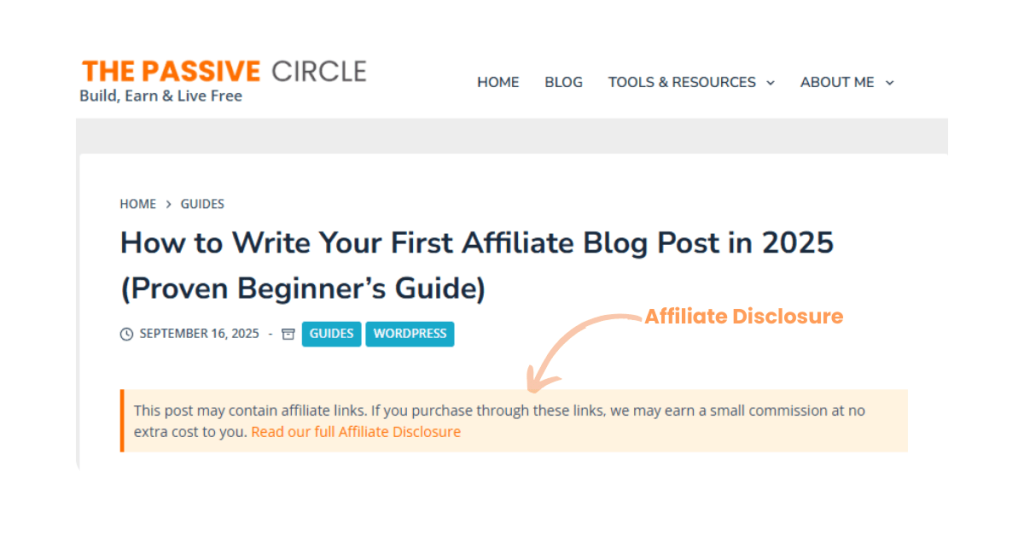
This post contains affiliate links. If you buy through them, I may earn a small commission at no extra cost to you. I only recommend products I trust.
You can also make a full Affiliate Disclosure page for your site and link to it from each blog post. This shows you’re professional, helps build trust, and keeps you following the rules.
The Fix:
- Always include a short disclosure at the beginning of posts with affiliate links.
- Add a full disclosure page to your website’s menu.
- For scaling, use plugins like:
- WP AutoTerms → Generates legal pages without manual input.
- Affiliate Disclosure WordPress plugin → Adds disclosures site-wide with one setup.
Honesty won’t drive readers away; it attracts them. Disclose affiliate links to build trust. Follow the rules and always be clear. Your audience will reward honesty with loyalty and support.
How to Avoid Affiliate Marketing Mistakes as a Beginner
By now, you’ve seen how easy it is to fall into these affiliate marketing mistakes to avoid. The good news? Most of them are completely preventable if you start with the right strategy.
Here are the core steps to keep yourself on track:
- Do niche research. Choose a topic you care about. Check the competition. Make sure people are spending money on it. (See my niche selection guide for a step-by-step process.)
- Choose quality products. Only promote tools or services you trust and would recommend. Test them when possible.
- Learn SEO basics early – a little keyword research goes a long way. You can use free tools like Ubersuggest and AnswerThePublic. They help you discover what topics your audience is searching for. (Check out my SEO for beginners post.)
- Start building your email list from Day 1. Social media and search algorithms change, but your list stays with you forever. Even a simple, free tool like Systeme.io can get you started.
- Track and adjust – Use Google Analytics and your affiliate dashboards to see what’s working and what’s not. That way, you’re never guessing.
Success in affiliate marketing doesn’t come from doing everything perfectly. Avoid common pitfalls. Focus on steady actions. This builds trust and traffic over time.
FAQs About Affiliate Marketing Mistakes
Why do most beginners fail in affiliate marketing?
Many newcomers fail because they think of affiliate marketing as an easy way to get rich. They jump in without a clear niche, promote too many random products, and don’t focus on building trust. Add in a lack of SEO knowledge and skipping email list building, and it becomes hard to grow. Success is about treating it like a real business. It takes time, consistency, and a focus on customers.
What is the number one affiliate marketing mistake?
The biggest mistake is choosing the wrong niche. If you go for high commissions without any interest or knowledge, you will burn out fast. If you choose a broad or overly competitive approach, your content will never rank. The right niche balances passion, demand, and profitability.
How long does it take to succeed in affiliate marketing?
Affiliate marketing isn’t instant income. Beginners usually take 6 to 12 months to see steady results. This is true if they publish often and use the right strategies. Some might notice small wins quickly, but real, lasting income takes time. It requires patience, learning SEO, and gradually building an email list.
The One Mistake That Causes All the Others
Most beginner mistakes come from skipping the basics.
Writing without structure.
Promoting without trust.
Publishing without a clear plan.Once I learned how to write one proper affiliate blog post, everything changed.
Want to avoid these mistakes from day one and start the right way?
👉 Read this next: How to Write Your First Affiliate Blog Post: Step-by-Step Guide for Beginners
Final Thoughts
Making mistakes in affiliate marketing is part of the journey. Every beginner stumbles at some point; what matters is how quickly you learn and adjust. The good news is that you can easily avoid most affiliate marketing mistakes. Just know what to watch for.
Remember:
- Choose the right niche.
- Focus on quality products.
- Build your email list early.
- Track your progress and keep improving.
Stay consistent and focus on your audience. Then affiliate marketing won’t feel confusing anymore. It will start to feel like a real business.
Or download my free Beginner Affiliate Starter Toolkit and start with clarity instead of confusion.