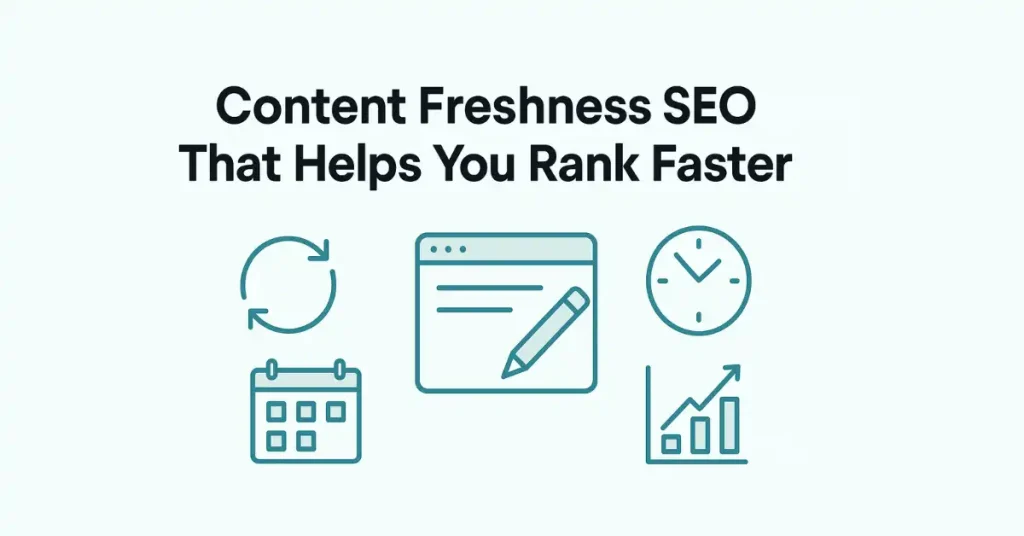
Content freshness SEO is about keeping your content up to date. It’s about adding new information and making sure your pages stay accurate, relevant, and active.
Google prefers content that is constantly updated and maintained. While old content can still rank well, fresh, updated content often performs better.
Imagine two shops:
- Shop One:
- Dust on the products. Old prices. Same items for years.
- Shop Two:
- New stock. Updated prices. Fresh displays.
Which shop feels better?
Shop Two, of course.
Your content works the same way. Google and your readers prefer the fresh shop, the one with updated products, prices, and displays. Keeping your content fresh makes it feel more relevant and reliable.
Table of Contents
What Makes Content Feel Fresh
You don’t always need to do a complete rewrite. Even minor updates can make a big difference.
Fresh content can include:
- New data or stats
- Updated screenshots
- New tools or better options
- Fixed broken links
- New sections based on new questions
- A clear note stating the current year
For example, if you’re writing an SEO guide, you can:
- Add new Google features
- Update screenshots of Search Console
- Change examples to reflect 2025
Simple Examples
Let’s take a look at how you can refresh older content:
- Old line: “This tool is new in 2022.”
- Updated line: “I still use this tool in 2025 for my keyword research.”
- Old screenshot: A screenshot of an old layout of a tool.
- Updated screenshot: The current layout of your dashboard.
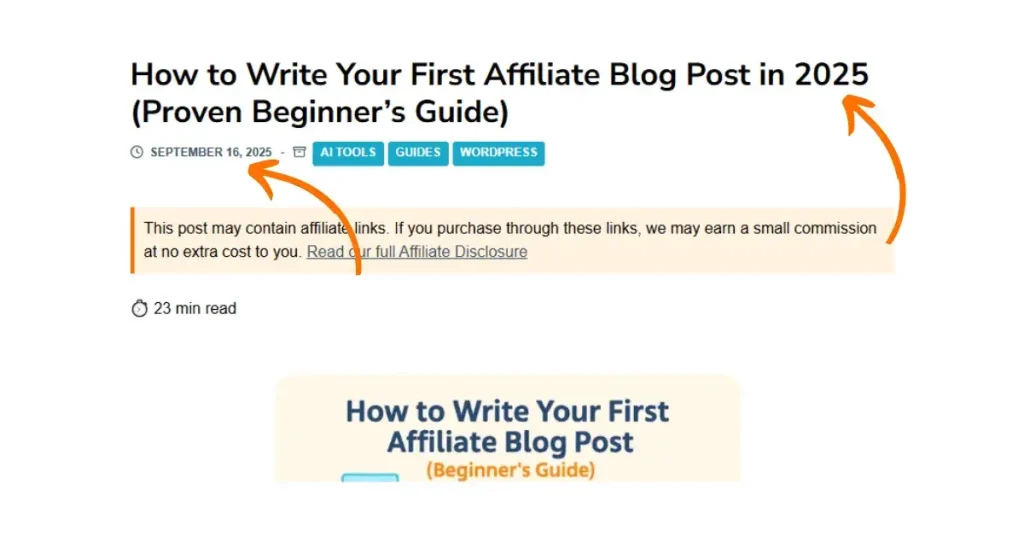
You can even add a small note at the top of the post:
Last updated in March 2025.
This shows both users and Google that you care about keeping your content up to date.
Which Pages to Update First for Content Freshness
You don’t have to update every page all at once. Start with your:
If you are into affiliate marketing like me, the update page might be:
- Affiliate marketing for beginners: A guide
- SEO basics guide
- Main review posts like Hostinger or Systeme.io
- Free traffic guide
These are the core pages of your site, and keeping them fresh will have the most significant impact.
What to Update Inside a Post
When reviewing a post, look for:
- Outdated years
- Old tool interfaces
- Dead tools
- Broken links
- Advice that you no longer follow
Once you’ve identified these areas, you can:
- Replace old tools with better options
- Add what you’ve learned since writing the post
- Remove tips that no longer work
- Add new screenshots from your real accounts
This process helps transform your content into a living resource that stays useful over time.
Content Freshness SEO Optimization Tips
Here’s how to make content freshness a regular part of your process:
- Create a simple update schedule:
- Review your key posts every six months. Add a note in a spreadsheet to track your main URLs and keep an eye on which posts need updates.
- Focus on your most important pages:
- Make a list of your top 10 most important posts. These are the pages that need your updated energy first.
- Share real examples from your journey:
- Add new examples from your current experiences. Don’t just rely on outdated information you read online; share what has worked for you this year.
- Check your links:
- Fix any broken links and update affiliate links if the destination has changed.
- Refresh meta titles and descriptions:
- If needed, update your meta title and meta description to reflect any changes. Be sure to include the new year when it fits, but keep the URL the same if possible.
Extra Tips for Affiliate Sites
Content freshness is crucial for affiliate blogs.
People want to know:
- Is this tool still good this year?
- Are the prices still accurate?
- Is there a better choice for beginners?
For example, you can add small lines like:
- “I still use this tool in 2025 on The Passive Circle.”
- “I stopped using this tool in 2025. Here’s what I use now and why.”
These updates offer real value to your readers. You’re not just chasing clicks, you’re guiding them with current, honest information.
Content Freshness SEO E-E-A-T Angle
Content freshness plays a crucial role in supporting all four parts of E-E-A-T (Experience, Expertise, Authority, Trust):
- Experience: You share what is working for you now, not just what worked years ago.
- Expertise: You update your content in line with new rules, tools, and insights, demonstrating that you continue to learn and adapt.
- Authority: Regular updates demonstrate that you care about your content, making it a reliable resource.
- Trust: By keeping dates clear, removing outdated information, and offering current advice, you show readers that they can trust your content.
Why Content Freshness Matters for SEO
- Better rankings over time: When you refresh strong posts, Google may see them as more relevant, pushing them higher in search results.
- More repeat visitors: People who found your helpful guide will come back for updates.
- Higher conversions: Up-to-date reviews and guides build more trust, leading to more sign-ups and sales.
- Safer advice: SEO and tools change fast. Old advice can harm results, but fresh advice helps beginners stay safe and succeed.
Simple Process I used for The Passive Circle
Here’s a simple process to keep your content fresh:
- Once a month, pick a vital post to update.
- Check the date and main details.
- Update: Year
- Data
- Screenshots
- Tools you now use
- Remove outdated or incorrect information.
- Add one or two new tips based on your recent experiences.
- Fix broken or outdated links.
- Save and change the “last updated” date.
By doing this once a month, your core content will stay fresh and relevant.
You can try simple tools to check content freshness.
Quick Checklist Before You Move On
Ask yourself about a page before you hit publish:
- Is the year still current?
- Are tools and screenshots up-to-date?
- Do all links still work?
- Does this match how I do things now?
- Would I feel good sharing this with a friend today?
If you can say yes to most of these, your content freshness is on track for both Google and your readers.
FAQs of Content Freshness SEO
What is content freshness in SEO?
Content freshness means how new or recently updated your content is.
Google likes pages that stay updated because it shows the information is current and helpful.
Why 96.55 percent of content gets no traffic from Google?
Most content gets no traffic because
it targets the wrong keywords
it has weak SEO
it never gets updated
it has no backlinks
Fresh content with clear intent stands a better chance to rank.
What are the 4 types of SEO?
The main types are:
On page SEO
Off page SEO
Technical SEO
Local SEO
What is the 80/20 rule in SEO?
The 80/20 rule says 80 percent of results come from 20 percent of your actions.
In SEO, that 20 percent is usually
picking the right keywords
writing helpful content
updating old posts
building a few good backlinks.
Content Freshness SEO Template
Use this simple template to update your old posts:
Check keyword intent
Add new stats and examples
Fix headings
Update screenshots
Improve the intro
Add missing questions
Refresh the meta title and description
Add internal links
Reindex in Search Console
Content Freshness SharePoint
SharePoint uses content freshness to decide which files or pages show up first.
Fresh pages appear higher because they are updated or used more often.
What is the importance of content freshness?
Content freshness helps Google trust your page.
Fresh pages attract more clicks.
Updated posts stay relevant for readers.
It also helps old articles rank again when competition increases.
Why is SharePoint being discontinued?
SharePoint is not fully discontinued.
Microsoft is slowly moving users toward cloud based tools like Microsoft 365 and OneDrive.
Some older SharePoint features are being retired but the platform still exists.
How to improve SharePoint performance?
Try these simple steps:
Clean up large files
Reduce heavy images
Use fewer web parts
Keep pages simple
Enable CDN
Update your browser
Use faster internet
Small changes make SharePoint load faster for everyone.
Content And Readability Navigation
Content Optimization | Content Formatting | Content Length Optimization | Content Relevance | Content Freshness | Content Readability