When you start publishing blog posts, you’ll notice something: people read, learn, maybe agree with you, and then leave. It’s not because your content isn’t good, but because you didn’t tell them what to do next.
Many marketers refer to this behavior as a “silent dropout,” where readers leave quietly after consuming content without taking any action. Industry research consistently shows that only a small percentage of readers take action, while the majority consume content passively unless guided by a clear call to action CTA.
To keep your readers engaged, it’s important to add a call to action, or CTA. And a good CTA can directly improve your click-through rate, which is one of the strongest signals that your content is helpful.
If you’re new to this, don’t worry. CTAs are simple. They’re short lines that guide readers to take an action, like clicking a link, joining your email list, reading another post, or checking out a tool you recommend.
Table of Contents
What Click Through Rate Really Means
Before we dive into Call To Action CTA, let’s clear up the other term click-through rate.
Your click-through rate (CTR) is the percentage of people who see your link and actually click it.
If 100 people see your link and 10 click, your CTR is 10 percent.
CTRs matter because Google watches how users interact with your content.
A higher SEO click-through rate tells Google that searchers find your post useful or interesting.
That can help your rankings grow over time.
If you ever want to check your CTR, you don’t need a special click-through rate calculator.
Google Search Console already shows it in the Performance tab.
A Call To Action acts as a quick guide at the end of your post. Without it, readers finish and just move on. With a CTA, they know exactly what you want them to do next. A clear CTA can lead readers deeper into your content, whether it’s to access a resource or learn how to earn their first $100 in affiliate income.
CTAs aren’t just about getting clicks. They help turn your readers’ interest into actions and give them a clear next step.
A well-placed Call To Action CTA:
- Increases your link clicks
- Improves your SEO click-through rate
- Reduces drop-offs
Many beginners think CTAs are only for sales pages. But every blog post should include at least one. Your goal is to guide your reader, not pressure them. And show them the real benefits they can get.
What Is Click Through Rate in SEO (and why CTAs help)
If you’ve asked “What is click-through rate in SEO?”, here’s the simple answer:
CTR is a signal that shows how many people think your link is worth clicking.
If your title is interesting and your snippet looks helpful, your CTR will go up.
A strong CTA means people are more likely to click your internal or affiliate links.
Both forms of engagement help Google understand the value of your content.
That’s why CTAs matter.
They help turn readers who just browse into people who take action.
Simple Call To Action Examples You Can Use Right Away
Here are some beginner-friendly CTA formats you can add to your posts:
Soft CTAs (low pressure)
- Read my beginner guide next.
- Get the checklist I use myself.
- See the step-by-step setup here.
Offer CTAs (affiliate-focused)
- Start your first blog with Hostinger.
- Try Systeme.io using my simple setup.
Email CTAs
- Join my newsletter for weekly beginner tips.
Your CTA should feel natural.
It should fit with the content your reader just finished.
Where to Place CTAs for the Best Click Through Rate
Where you place your CTA can affect your CTR even more than the words you choose.
Here’s what works well:
One soft CTA near the top of the post
One helpful CTA after a strong value section
One final CTA at the end
You don’t need to add several CTAs.
A simple structure makes your post easier to read and can help boost your click-through rate.
If your CTR seems low, try these simple adjustments:
- Keep your CTA short and clear.
Readers should see the benefit right away. Make sure your CTA matches your content. - If your post is a review, suggest the tool you used.
- If it’s a guide, offer the next step.
- Use action words
Start with: Get, Start, Try, Read, Download. Add one strong CTA per post. - If you give too many options, your click-through rate can drop.
- Add a reason to click. For example: “Start your blog with the same setup I use.”
Short, honest lines like these help build trust. - Try setting aside one day each month to review and update your CTAs. This habit helps keep your CTAs in line with what your readers want, so they stay effective.
Best Practices for Call To Action That Feel Natural
Many beginners worry that CTAs sound too much like a sales pitch. But a CTA doesn’t have to be pushy. It only needs to guide your reader. A good CTA should feel like a friendly suggestion. A bad CTA feels like you’re putting pressure on the reader.
Here’s a simple rule:
- Give value first.
- Ask second.
When you genuinely help your readers, they’re more likely to click.
Simple Call To Action Workflow for Every Blog Post
Before you publish a post, follow this simple routine:
- Review your CTR inside Google Search Console later.
- Ask yourself, “What is the goal of this post?”
- Choose one main CTA that matches the goal.
- Place the CTA after a valuable section.
- Make the CTA visually stand out so users notice it.
- Keep the wording short and clear.
- Make sure the link works correctly.
Doing this can help you gradually improve your SEO click-through rate across your whole site.
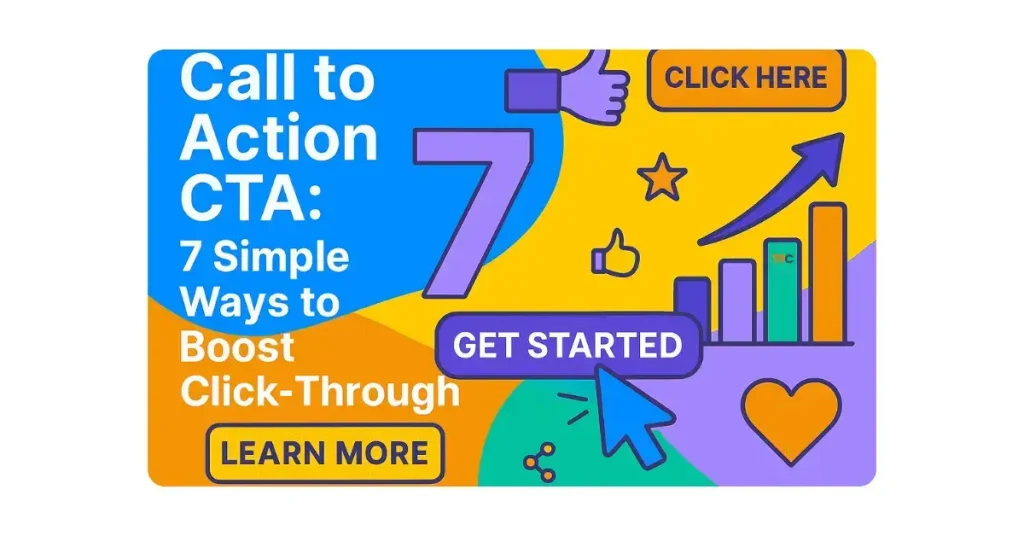
These 7 simple CTA habits may look small, but together they can significantly boost your click-through rate over time.
Final Thoughts
A good call to action is one of the simplest ways to boost your click-through rate.
- It increases engagement.
- It supports SEO.
- For affiliate marketers, it can also help turn your traffic into real income.
- Start by adding one clear CTA to each post.
- Make sure it’s honest.
- Make sure it’s useful.
- Update your CTA as your content changes and grows.
Helpful Resources to Learn More About Call to Action (CTA) and CTR
If you want to understand how calls to action influence clicks and user behavior, these trusted resources explain the concepts clearly and back them with real data.
- Google Search Central – Improve Snippets & Clicks
Google’s official guidance on improving titles, snippets, and click behavior in search results.
https://developers.google.com/search/docs/appearance/title-link - Google Search Console – Performance Report
Learn how to track clicks, impressions, and CTR for your pages directly from Google.
https://support.google.com/webmasters/answer/7576553