This post may contain affiliate links. If you purchase through these links, I may earn a small commission at no extra cost to you. Read our full Affiliate Disclosure

If you want to leave your 9 to 5 job, you’ve likely searched for affiliate marketing without a website. It sounds tempting, right? No domain, no hosting, no upfront cost. Just share a link and get paid.
The truth is, affiliate marketing without a website is possible, but it comes with pros, cons, and beginner-friendly methods you should know before starting.
Here, I’ll break down the best ways to do affiliate marketing without a website. And when it makes sense to eventually build your own site for long-term growth.
Table of Contents
Can You Really Do Affiliate Marketing Without a Website?
Yes, but it depends on the channel, tracking, and plans for scaling.
You can start promoting products and earning commissions without a site.
You can share affiliate links in several ways:
- Social platforms
- Email lead ads
- Podcast mentions
- Link-in-bio pages
Top industry leaders say a website is helpful, but it’s not a must-have.
You can start affiliate marketing without a website. Still, plan for tracking, disclosure, and future audience ownership. But it’s riskier in the long run and harder to grow compared to starting with a website.
Affiliate Marketing Without a Website: What Changed and Why It Matters
- Social commerce grew. Platforms make it easier for users to buy within the app. That means shorter paths to buy for affiliates.
- Creator programs have expanded. Many brands now reward creators who drive direct sales on social.
- Privacy and tracking rules keep changing. That affects how you measure results without a site. Using trackers and UTM* tags matters more than ever.
- Link-in-bio and micro-page tools have matured. They now offer analytics and conversion tools that once needed a full website.
The world is friendlier to no-site affiliates than before. However, these channels also tie your income to platforms you don’t own.
*Note: UTM stands for Urchin Tracking Module. It uses codes in URLs to track digital marketing campaigns. These codes show where the traffic comes from, the medium used, and the campaign that led users to the website.
Best Affiliate Marketing Without Website Methods
If you’re starting out and want the best affiliate marketing without website methods, here are the proven approaches that still work:
- YouTube (Reviews & Tutorials)
- Long videos + Shorts.
- Place affiliate links in descriptions/pinned comments.
- Works best for evergreen topics.
- TikTok / Instagram Reels (Short-Form Content)
- Fast reach, even with zero followers.
- Use link in bio (Linktree, Systeme.io).
- Pinterest Affiliate Pins
- Create simple pins that link directly to affiliate offers or pre-landers.
- Great for niches like home, fitness, beauty, finance.
- Email List (Without a Website)
- Use Systeme.io or Carrd for free landing pages.
- Offer a simple lead magnet → promote offers via email.
- Web 2.0 Blogs (Medium, LinkedIn, Substack)
- Free platforms with built-in audiences.
- Write reviews/how-tos, include affiliate links with disclosure.
- Reddit & Forums
- Share helpful answers, then drop affiliate links carefully.
- Best for niche products where people ask for recommendations.
Start with one channel, test for 30 days, and double down on what works before adding others.
Affiliate Marketing Without Website Free: What Actually Works
If you don’t want to spend money upfront, here are the free ways to start affiliate marketing without a website:
- TikTok / Instagram Reels → Post short product reviews or tutorials, use link in bio.
- YouTube (free) → Film with your phone, upload reviews/tutorials, drop affiliate links in description.
- Pinterest → Design free pins on Canva, link them to your affiliate offers.
- Medium / Substack → Write free blog-style posts with affiliate links.
- Reddit / Quora → Answer questions, give value first, then share your link carefully.
Start free, but reinvest your first earnings into simple tools (like email software or a blog) for stability.
Affiliate Marketing Without Website for Beginners: Step-by-Step
If you’re brand new, here’s a simple 5-step beginner roadmap:
- Pick a niche (fitness, beauty, finance, tech tools).
- Join an affiliate program (Amazon, ClickBank, Systeme.io).
- Choose one platform (TikTok, YouTube, or Pinterest).
- Create valuable content (short tips, reviews, before/after results).
- Add your link in bio, description, or caption with a clear disclosure.
Start with TikTok or YouTube Shorts → they give you fast visibility even if you have no followers.
Now, let’s explore the real options: channels that still work without a website and how to use them effectively.
Below, I list channels that work today, what they need, and quick templates you can follow. Each mini-section ends with a next step you can take today.
Affiliate Marketing Without a Website on YouTube (Reviews & Shorts)
Why it works: Users find content, watch a review or tutorial, and then click a link in the description or pinned comment. YouTube search can be long-lasting (evergreen).
How to use it:
- Create long videos, like reviews and tutorials. Then, make short clips, such as YouTube Shorts, from the same content.
- Put your affiliate links in the video description and add a short disclosure at the top.
- Use a short pre-lander (a one-page link) for expensive products to warm up the buyer.
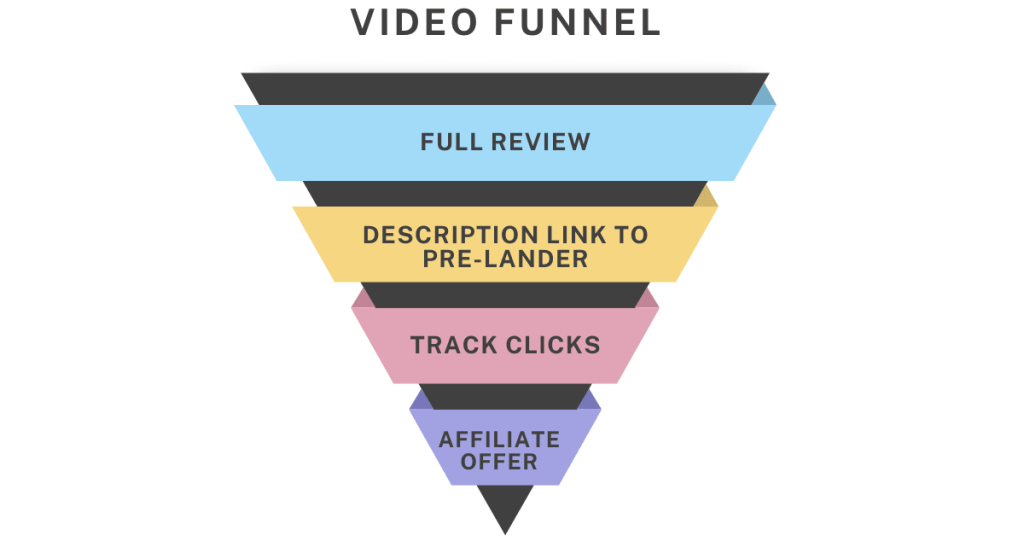
Example video funnel: Full review → description link to pre-lander → track clicks → affiliate offer.
Quick video script bullets:
- Hook (10s): “Stop wasting money — here’s my honest review…”
- Problem (20s): “People buy X expecting Y, but most miss Z.”
- Demo/Proof (60–180s): Show real use.
- CTA (10s): “Link in description — I tested it for X days.”
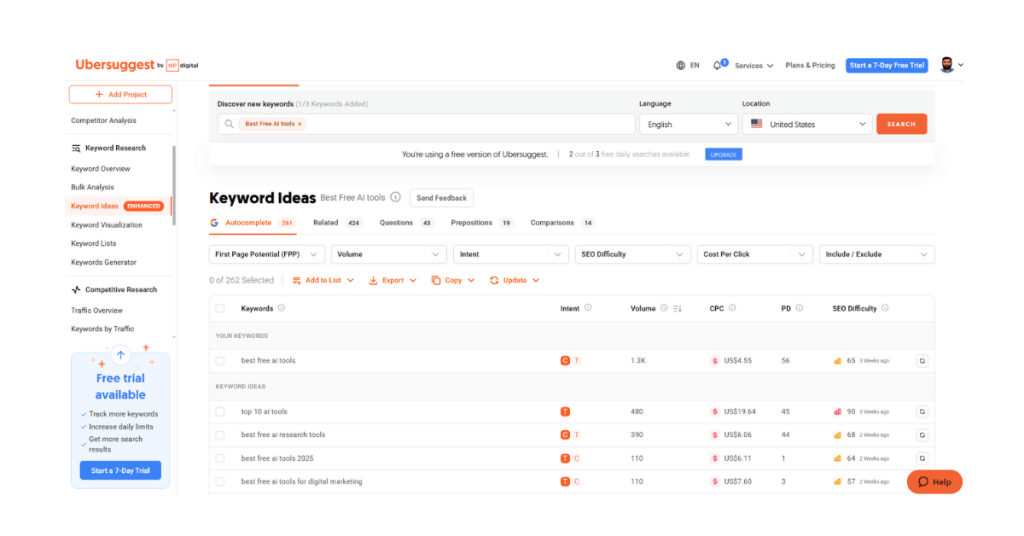
Tools: Ubersuggest (keyword ideas for YouTube), link-in-bio, and short pre-lander builder.
Why I Recommend Ubersuggest
- Easy keyword research tool for beginners.
- Find low-competition topics to rank faster.
- Shows traffic, SEO difficulty, and content ideas.
- Affordable compared to other SEO tools.
Next step: Record one 5-7 minute review video. Put a link to your pre-lander in the description.
Affiliate Marketing Without a Website on TikTok, Reels & Shorts
Why it works: Viral reach. It’s easy to get fast views without followers. But the attention span is short.
How to use it:
- Use short format: demo, before/after, or quick tip.
- Use a link-in-bio tool as the bridge. For example: TikTok → Linktree → affiliate link or lead magnet.
- Don’t hard-sell. Show a small win, then invite a curious user to learn more through your link.
Creative formats that convert:
- 15s demo clip + “Want the full guide?” CTA
- 30s “I tried X for seven days” summary
- Short “compare” videos (this vs. that)
Next step: Make three short videos around one product. Put the same link in the bio.
Email Marketing Without a Website (Free & Beginner Options)
Why it works: Email owns attention. Even without a website, you can capture emails with lead forms or link-in-bio lead magnets. Then you can send affiliate funnels.
How to use it:
- Use in-app lead forms (Facebook lead ads) or a link in your bio to a hosted landing page (Systeme.io does this well).
- Create an easy lead magnet: “5 shortcuts to X.” Send it via email with affiliate links included.
Tools: Systeme.io (for landing pages and email).
Next step: Create a one-page lead magnet with Systeme.io and link it in your bio.
Best Link-in-Bio Tools for Affiliate Marketing Without a Website
Why it works: They’re simple “mini-sites” that sit behind your social bio. They can host links, small funnels, and sometimes analytics.
How to use it:
- Order links by priority. Put an email capture or best offer first.
- Add short assets (PDF, coupon) to collect emails.
- Use UTM parameters on links for basic attribution.
Best for: Beginners who do not want to buy hosting yet.
Next step: Choose a link-in-bio tool (I like systeme.io for small landing pages. You can also use Carrd for it).
Why I Recommend Systeme.io for Beginners
- Free plan available (great to start with no money).
- All-in-one tool: landing pages, email marketing, funnels.
- Easy drag-and-drop editor (no tech skills needed).
- Perfect for affiliate marketing without a website.

Affiliate Marketing Without a Website Using Medium, LinkedIn & Substack
Why it works: These platforms have built-in audiences and some SEO power. You can publish reviews, how-to articles, and link to offers.
How to use it:
- Write helpful long-form posts with clear disclosures and links to a tool or offer.
- Republish or repurpose pieces across Medium and LinkedIn to reach different readers.
Next step: Publish an 800–1,200-word product review on Medium with one tracked affiliate link.
Affiliate Marketing Without a Website on Pinterest, Reddit & Forums
- Pinterest: Great for visual discovery. Pin tutorials or listicles linking to a pre-lander or affiliate products.
- Reddit/forums: Niche communities can convert if you help first. Always follow community rules and disclose any affiliate relationships.
- Podcasts: Mention tools in the show notes and in the episode. Use a short code link or coupon — easy to track.
Next step: Pick one platform other than YouTube or TikTok. Then, publish three pieces of content this week.
Affiliate Marketing Without a Website Funnels (Channel → Bridge → Convert)
You need a simple funnel, even without a website. Here are three tested templates:
- YouTube → Pre-lander → Offer
- Use a short pre-lander to warm the visitor. It’s good for higher-ticket offers.
- TikTok → Link in bio (email capture) → Email sequence → Offer
- Capture email first. Email warms and converts better than direct linking.
- Pinterest → Direct affiliate link
- Works for low-ticket offers with strong visuals.
Why pre-landers and email matter: Direct linking can lead to sales. However, warming traffic boosts conversion rates and reduces refunds or returns.
Next step: Pick one template and write the copy for each stage.
Tracking Affiliate Marketing Without a Website (How to Measure Results)
Tracking is the secret sauce. Without accurate tracking, you’ll guess instead of improving.
Basics you can use now:
- UTM tags: Append UTM parameters to links so you know where clicks come from. Voluum has a plain guide on UTM tracking.
- Link trackers and redirectors like Voluum and RedTrack track clicks and conversions. They work for funnels that aren’t hosted on a site. Voluum docs explain how to capture visits and conversions.
- Affiliate dashboard: Use the network’s dashboard to confirm sales. Combine with your UTM/link tracker to ensure accurate attribution.
Tracking checklist:
- Always add UTMs to social or link-in-bio links.
- Use a tracker for paid ad campaigns.
- Record conversion rates and costs per conversion.
Track everything. If you can’t measure it, you can’t scale.
Risks of Affiliate Marketing Without a Website (Legal & Platform Issues)
This is not fun, but it is critical.
Disclosure rules:
- The FTC requires clear disclosure for endorsements. Use plain language: “I may earn a commission if you buy through this link.” The FTC guide provides clear rules.
Platform risks:
- The platform can shadowban your account, remove it, or change the policy. That kills income fast. Diversify traffic sources.
Example legal risk: Other creators and influencers faced FTC action. They did not clearly show endorsements. Be transparent.
Next step: Add a disclosure to every description, pinned comment, or post that has affiliate links.
Affiliate Marketing Without a Website: Pros and Cons (Honest Checklist)
No-site approach — Pros
- Fast to start.
- Low upfront costs.
- Good for creators who avoid showing their face (audio/text-based).
No-site approach — Cons
- Platform dependency.
- Harder to build SEO authority or passive organic traffic.
- Tracking and long-term branding have limitations.
Website-first approach — Pros
- Ownership and control.
- SEO growth and evergreen traffic.
- Better for building an email list and product funnels.
Website-first approach — Cons
- Upfront costs and a learning curve.
- Slower early momentum.
Affiliate Marketing Without a Website vs. With a Website
Should you start affiliate marketing without a website or build one from day one? Both options work, but they come with trade-offs. Here’s a side-by-side comparison to help you decide.
| Aspect | No Website (Fast Start) | With Website (Long-Term Growth) |
|---|---|---|
| Startup Cost | Free or very low (TikTok, YouTube, Linktree) | Domain + hosting ($30–$100/yr) |
| Speed to Start | Same day → post content & add links | 1–2 weeks setup (WordPress, design, plugins) |
| Traffic Source | Platforms you don’t own (social media, forums) | Organic SEO + email list + social |
| Control & Ownership | Dependent on algorithms & bans | Full control of content & audience |
| Brand Building | Harder → limited customization | Easier → your own brand hub |
| Trust & Authority | Lower (links in bio look “casual”) | Higher (professional blog builds credibility) |
| Tracking & Analytics | Limited → rely on platform data | Full tracking (Google Analytics, plugins) |
| Scalability | Can hit quick wins but capped by platform | Evergreen growth (SEO, email funnels) |
| Best For | Beginners testing with no money | Serious affiliates aiming for passive income |
| Main Risk | Platform bans, account closures | Small upfront cost & learning curve |
As you can see, affiliate marketing without a website is faster and cheaper, but limited for long-term growth. A website takes more effort upfront, but it builds a lasting asset you fully control.
When to Move From Affiliate Marketing Without a Website to a Blog
Move to a website when one or more of these are true:
- You have a reliable content flow and consistent traffic.
- You want to scale SEO for evergreen topics.
- You’re earning a steady income and want to diversify.
- You need better conversion funnels (membership, longer email flows).
Rule-of-thumb signals:
- Followers/audience: steady engagement over three months.
- Income: consistent $X X/month (set your own threshold).
- Content reuse: You want to repurpose content into emails and long articles.
Hosting tip: If you’re in Bangladesh, try ExonHost. I use them for local support.
Next step: If you hit any of the signals above, start a simple WordPress site and migrate your best content.
Tools and resources (short tables)
Link-in-bio & micropages
- Linktree, Beacons, Carrd.
Landing pages / Email (no site)
- Systeme.io — hosted funnels + email
Keyword research
- Ubersuggest — keyword ideas for content and YouTube.
Topic validation
- LowFruits — find low-competition keywords.
Tracking
- Voluum or RedTrack — advanced tracking for non-site funnels.
Start without a website by using a link-in-bio, tracking, and a simple email tool.
Mini case study or experiment plan (30-day template)
Goal: Validate if a product converts on one channel.
Week 0 — Plan
- Choose product and offer (pick 1).
- Choose a channel (TikTok or YouTube).
- Prepare three content pieces.
- Set up link-in-bio and tracking (UTM + Voluum or basic UTM in Google Sheets).
Week 1–2 — Test
- Publish 3–6 posts.
- Monitor clicks, CTR, and conversions.
- Record cost (if boosting) and conversion rate.
Week 3–4 — Learn and iterate
- Double down on the top-performing content.
- Add an email capture to warm traffic.
KPIs to track:
- Clicks, CTR, conversion rate, earnings per click, and ROI.
Note: I haven’t tried this specific no-site test yet. But, this is the template I’d use for a TikTok → Linktree → Amazon test.
Small experiments give real numbers—publish results to gain trust and traffic.
Common mistakes and how to avoid them
- No disclosure. Always disclose (FTC). If you want to know more, click Federal Trade Commission.
- Rely on one platform. Diversify.
- No tracking. Add UTMs and a tracker.
- Direct linking for high-ticket items without warming. Use a pre-lander.
- Ignoring refunds and returns. Track by coupon codes or tracked links.
Next step: Put in place a disclosure template and add a mandatory UTM on each link.
90-day action plan (step-by-step for beginners)
Month 1: Foundation
- Week 1: Pick a niche and product. Use LowFruits & Ubersuggest for validation. (My LowFruits link.)
- Week 2: Create 3 content pieces on the chosen channel.
- Week 3: Set up link-in-bio and a basic email capture (Systeme.io).
- Week 4: Track, measure, and record results.
Month 2: Optimization
- A/B test CTAs and pre-landers.
- Start repurposing content across channels.
Month 3: Scale
- Double down on winners.
- Consider a basic WordPress site to capture organic search if traffic is stable.
Start small. Measure. Scale what works.
FAQs for Affiliate Marketing Without a Website
1. Can I be an affiliate marketer without a website?
Yes, you can. You don’t need a website to start. You can promote affiliate links through:
YouTube videos (add links in the description).
TikTok/Reels (use “link in bio”).
Pinterest pins linking to offers.
Email lists built with landing pages (e.g., Systeme.io).
Step 1: Pick a niche.
Step 2: Join an affiliate program.
Step 3: Choose a channel (YouTube/TikTok/Pinterest).
Share content regularly using your affiliate link.
2. Can you make $100 a day with affiliate marketing without a website?
Yes, but it’s not overnight. To hit $100 a day, you’ll need:
A proven channel (e.g., TikTok + Linktree + Amazon/CPA offers).
High-converting product (digital tools often pay higher).
Consistency in posting content.
Mini Plan:
Create 3–5 TikToks daily reviewing or teaching something in your niche.
Add affiliate link in bio (via Linktree).
Track clicks → double down on what drives sales.
3. Which affiliate program does not require a website?
Many allow you to join without a site, including:
Amazon Associates (you can use social channels).
ClickBank (digital products, instant approval).
JVZoo, WarriorPlus (info products).
CPA networks (some require traffic proof, but not always).
Tip: Always check program policies. Some people want to see where you will promote your link.
4. Is it necessary to create a website for affiliate marketing?
No, it’s not necessary, but it helps in the long run. Without a website → you’re at the mercy of algorithms and bans. Owning a website allows you to control your traffic, develop SEO, and achieve growth over time.
My take: Start without a website if money is tight, but plan to build one for stability.
5. How to start affiliate marketing without a website?
5-Step Beginner Plan:
Pick a niche (fitness, finance, beauty, tools).
Join an affiliate program (Amazon, Systeme.io, ClickBank).
Choose a platform (TikTok, Pinterest, YouTube).
Create valuable content (reviews, tutorials, tips).
Place affiliate links in the bio, description, or captions.
6. Affiliate marketing without a website for free, is it possible?
Yes. You can start free with:
TikTok/YouTube (organic content).
Pinterest boards (pinning affiliate links).
Medium/Substack (free blogging).
Reddit/Quora (helpful answers with links, but be careful with rules).
7. Best affiliate marketing without website methods?
Top working methods:
YouTube Shorts + pinned affiliate links.
TikTok/Reels with Linktree.
Pinterest affiliate pins.
Email list via Systeme.io free plan.
8. Affiliate marketing without a website for beginners, how do I start?
Start with short-form video (TikTok/Reels).
Choose low-ticket trending products (easy to sell).
Add link-in-bio page (Linktree/Beacons).
Share your journey authentically → beginners trust real stories.
9. Do you need a website for affiliate marketing on Amazon?
No, Amazon Associates allows social media promotion.
You can create a TikTok account reviewing books, then drop your Amazon affiliate link in the bio.
10. Pay-per-click affiliate programs without website, is it possible?
Yes, but it’s tricky.
Some CPA networks allow paid ads → direct offer (no site needed).
However, Google Ads/Facebook Ads often disallow direct affiliate links. Solution: Use a bridge page (a free landing page with Systeme.io or Carrd).
11. Amazon affiliate program, can I join without a website?
Yes. Amazon lets you apply with:
A social profile (TikTok, YouTube, Facebook).
A mobile app.
A landing page (if you prefer).
12. Do you need a website for affiliate marketing on Pinterest?
No, but it helps.
Pinterest lets you add affiliate links directly to pins.
Best practice: Use beautiful pin designs and SEO-friendly titles.
13. Affiliate marketing websites vs. no website, what’s better?
No website: Faster start, less control.
With website: Slower start, long-term passive traffic (SEO).
Smart strategy: Start without → then reinvest in building your website.
14. Best affiliate marketing programs without a website?
Top picks for beginners:
Amazon Associates (broad range).
ClickBank (digital products).
Impact (tools, SaaS).
ShareASale (fashion, lifestyle).
Systeme.io (landing page + affiliate program built in).
15. How do you start affiliate marketing with no money?
Free Start Method:
Open a TikTok account in your niche.
Join Amazon Associates or ClickBank.
Post short daily videos reviewing products.
Add the affiliate link in the bio.
Track clicks → scale content that works.
16. CPA affiliate marketing sign up, can I do it without a site?
Yes, some CPA networks accept beginners without sites (e.g., MaxBounty, PeerFly).
But: They may ask how you’ll drive traffic. Be honest—say TikTok, YouTube, or Pinterest.
17. Affiliate marketing on social media without a website, how?
Create a profile dedicated to one niche.
Post daily content with value and product mentions.
Add an affiliate link in the bio or captions.
Example: Fitness TikTok → post-workouts → bio link → protein powder affiliate.
18. Can I promote affiliate links directly on Facebook?
Yes, but with limits.
Facebook sometimes bans direct affiliate links.
Safer to use a landing page (free Systeme.io or Linktree).
19. Is affiliate marketing without a website sustainable long term?
Not really. Social platforms can ban or throttle reach at any
That’s why many affiliates eventually build a site for stability and SEO traffic.
20. Should beginners start with a website or without?
If you’re shy, broke, or just testing → start without a site. But if you want long-term growth, SEO, and brand → build a site early.
My choice: I started with a WordPress blog because it’s evergreen. One post can bring traffic for years.
Conclusion + CTA
You can absolutely start affiliate marketing without a website. Social platforms and link-in-bio tools make it easy to begin. But a website gives you control, SEO value, and a durable asset that grows over time. For beginners seeking long-term freedom, starting a simple WordPress blog is smart. That’s why I chose it for ThePassiveCircle.
What to do next (quick):
- Download my Starter Toolkit and follow the 30-day experiment plan.
- Try Ubersuggest for topic research.
- If you want hosted landing pages and email funnels, test Systeme.io.
I share everything I learn about affiliate marketing as I go. Here are my most recent posts you might find helpful.
- How to Do Keyword Research for Free (Find Easy Keywords for Beginners)
- Link Juice in SEO: A Simple & Easy Guide for Beginners
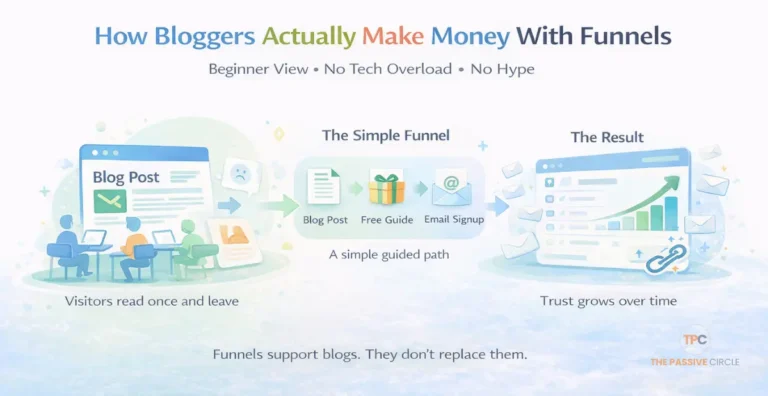
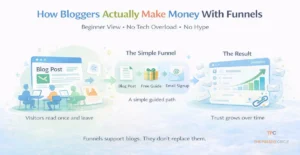
- How Bloggers Make Money With Affiliate Marketing Funnels (Simple Guide)
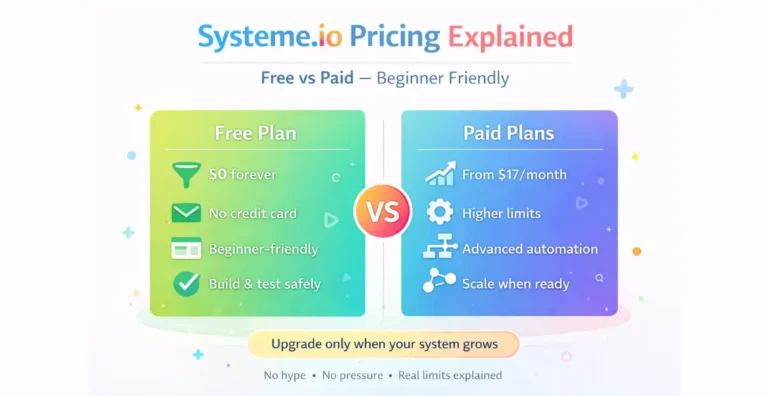
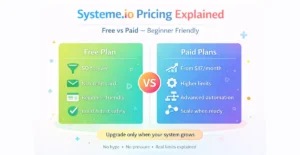
- Systeme.io Pricing Explained for Beginners (Free vs Paid Plans)
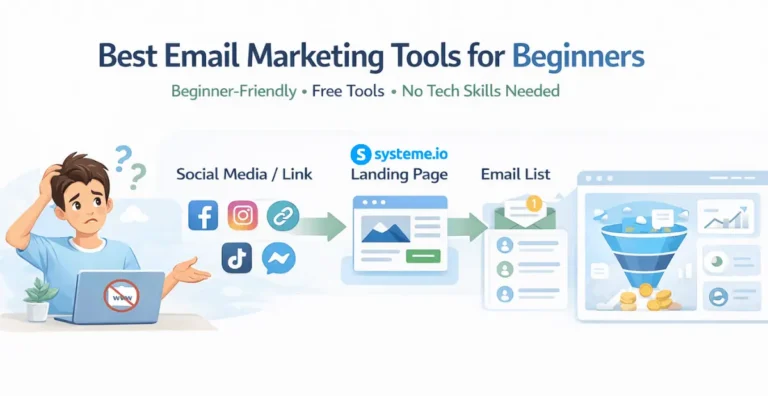
- Best Email Marketing Tools for Beginners With No Website