This post may contain affiliate links. If you purchase through these links, I may earn a small commission at no extra cost to you. Read our full Affiliate Disclosure
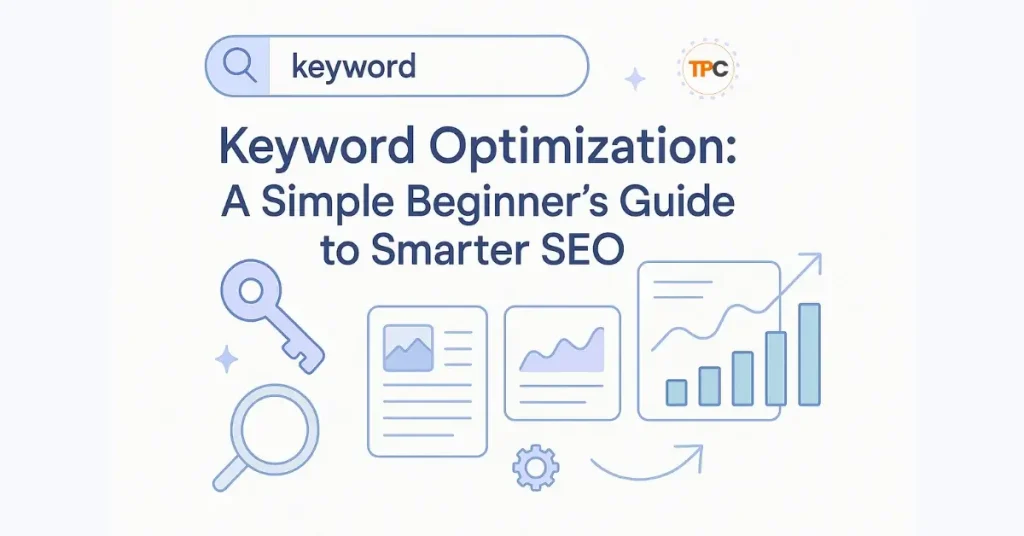
Keyword optimization means choosing the right keywords and using them effectively so Google can understand your topic. The aim is simple. You want the right people to find your content. Not random visitors, but readers who genuinely need your help.
Think of your keyword like the sign outside a small shop. If you write SHOES on the sign and the shop really sells shoes, the right customers will walk in. If the sign and the inside do not match, people will leave.
Your content works the same way. Your keywords should match what’s in your post and what people search for on Google.
Table of Contents
The Three Steps of Keyword Optimization
Keyword optimization becomes easy when you break it into three straightforward steps.
- Choose: Pick one main keyword. Then choose a few related keywords that support it.
- Place: Add your keywords in the right spots so Google and readers can see them quickly.
- Match: Make sure your content matches the real intent behind the keyword. This means your post must answer the question the user had in mind.
When these three steps fit together, your content becomes clear and helpful.
Simple Example of Optimization
Imagine your topic is SEO tips for beginners.
Your primary keyword can be SEO tips for beginners.
Your related keywords can be simple SEO tips or improve ranking.
You can add your keywords like this.
- Title: Simple SEO Tips for Beginners
- H2: SEO Tips to Improve Your Ranking
- URL: yourdomain.com/seo-tips-beginners
- Image alt text: SEO tips checklist for beginners
This feels natural. Nothing is forced. The content matches the topic clearly.
Where to Put Your Keywords
To keep things simple, add your main keyword in these strong spots.
- Title tag
- H1 heading
- URL
- First hundred words
- One or two subheadings
- Meta description
- One or two image alt texts
This is enough for a clear signal. You do not need the keyword in every line of your post. Variations and long phrases also help you cover more searches.
Using Long Phrases and Variations
Long phrases are more specific versions of your keyword. They work well because beginners often type full questions into Google.
Example
- Short keyword: SEO tips
- Long phrase: SEO tips for new affiliate blogs
- Long phrase: Simple SEO tips for beginners in 2025
You can also use softer variations, such as ranking higher on Google or boosting your search results. These help your writing stay natural while still showing Google what your topic is about.
Keyword Optimization for Affiliate Blogs
If you write affiliate content, keyword optimization is even more critical. Your keywords connect users to your earning pages. For this type of content, use four keyword groups.
Info keywords
- What is affiliate marketing
- How to start affiliate marketing
- Free traffic methods
Review keywords
- Hostinger review
- Systeme io review
Compare keywords
- Hostinger vs Namecheap
- Systeme.io vs. ClickFunnels
Action keywords
- Start a blog with Hostinger
- Sign up for Systeme.io
Use info posts to teach. Use review and comparison posts to help readers choose. Use action posts when the user is ready to take the next step.
How Beginners Can Find Good Keywords
Start with a simple method.
- Write down what you want to teach.
- Type the phrase into Google.
- Look at Google suggestions.
- Check People also ask.
- Scroll to the related searches.
These are real words from real people. Choose the phrases that match your content. You can also use free tools like Google Keyword Planner or Ubersuggest for more ideas. You do not need perfect data. You only need phrases that match your topic.
How Optimization Connects to Trust
Good optimization is not about chasing high volume. It is about serving the people you can help. Well, if your audience includes beginners, full-time workers, and people with small budgets. This means your keywords should match their world.
For example
- Affiliate marketing for beginners in USA
- Start a blog with a low budget
- Earn passive income while working full-time
You can write lines like
In this guide to affiliate marketing for beginners, I share the steps I use while working a full-time job in California.
This builds trust because it shows real experience. It also includes your keyword naturally.
Why Optimization Matters
Optimization helps you do three important things.
- Attract the right visitors
- Match real search intent
- Increase conversions
When your keywords match what people are searching for, they spend more time on your page. They join your list. They read your reviews. They may even try the tools you recommend.
Good optimization also stops you from writing random posts. Everything becomes focused and straightforward.
A Simple Keyword Optimization Plan for Blog Post
For each new post, follow this small routine.
- Choose one main keyword and three to five related long phrases.
- Check the search intent. Ask what the user wants to learn or do.
- Add your main keyword in the title, H1, URL, intro, one subheading, and the meta description.
- Write your post in a friendly, simple voice.
- Reread it. Make sure it sounds natural and matches the intent.
- Remove any heavy or repeated uses of the keyword.
This routine keeps your writing clean and targeted.
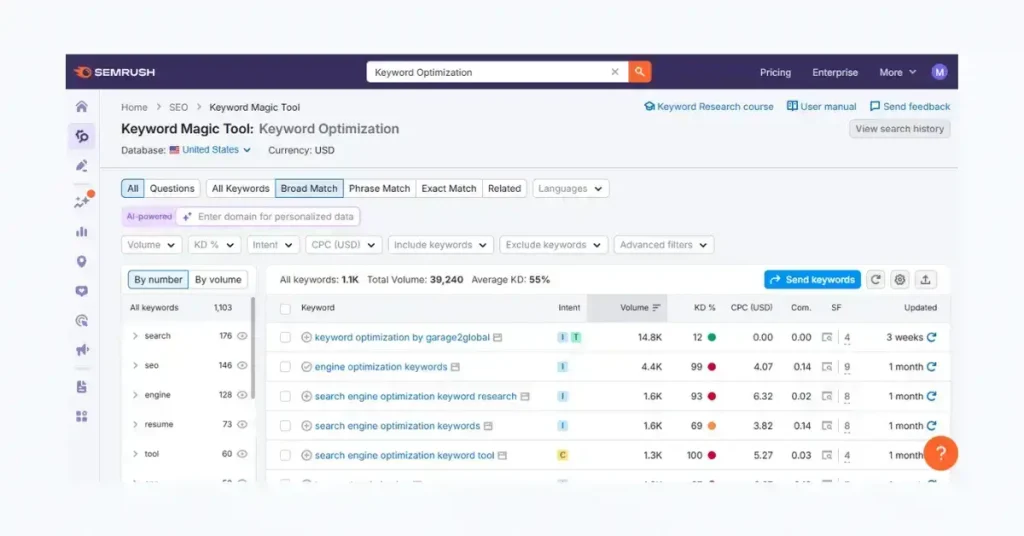
Tools like Ubersuggest, SEMRush, Rank Math, and Ahrefs can help you check your keyword placement, keyword density, keyword optimization, semantic keywords suggestions, LSI keyword, SEO score and performance.
Quick Questions Before You Publish
Before you hit publish, ask yourself
- Did I choose one explicit main keyword
- Did I add a few helpful long phrases
- Is my keyword in the title, H1, URL, and intro
- Did I use variations in the content
- Does the post match what the searcher wants
- Does everything sound natural
If your answer is yes, your optimization is strong for both readers and Google.
Keywords and Intent SEO Navigation
Keyword Placement | Keyword Density | Keyword Optimization | Search Intent Matching | Semantic Keywords | LSI Keywords
Read my ultimate beginners friendly SEO guides. Learn & apply.