This post may contain affiliate links. If you purchase through these links, I may earn a small commission at no extra cost to you. Read our full Affiliate Disclosure
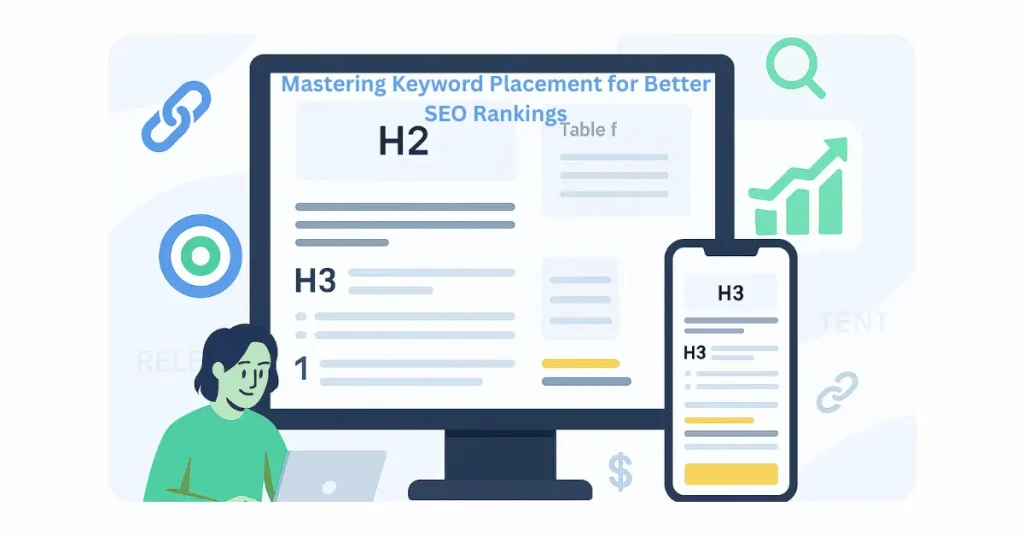
Keyword placement means adding your main keyword in the right spots on your page. When you do this naturally, Google quickly understands your topic. It also helps your reader see that they are in the right place.
Think of your keyword like a clear label on a book. When the label is on the cover, the chapter title, and the first line, people know the topic instantly.
If the label sits somewhere in the middle of the book, no one understands what the story is about. Your blog works the same way. Good placement makes your topic easy to follow.
Table of Contents
How to Place Your Main Keyword
You do not need to add your keyword everywhere. You only need it in a few strong locations. These spots signal to Google that your page is focused on a clear topic.
Here is a simple flow you can follow.
- Title: Your keyword should be close to the start of the title. This helps both search engines and humans quickly understand the main subject.
- H1 Heading: Use your keyword once in the main heading at the top of the page. This heading confirms the topic.
- URL: Add a short version of the keyword inside the URL. Please keep it clean and straightforward.
- First Paragraph: Mention the keyword within the first hundred words. Make it sound natural. You are only helping the reader see the topic early.
- One Heading Inside the Post: Use the keyword or a close variation in one H2 or H3. This supports the central theme.
- One Image Alt Text: Use the keyword once in an image alt text. This helps with clarity and accessibility.
- Meta Description: Add the keyword in a simple sentence. It should read like a regular line and not feel forced.
These seven keyword placements are enough. You do not need to repeat the keyword again and again. A natural voice is always better than forced repetition.
Main Keyword and Related Terms
Your primary keyword is the phrase you want to rank for. Related terms are words that have a similar meaning. They help your content sound human and complete. For example, if your keyword is “affiliate marketing for beginners,” your related terms could include “beginner affiliate guide,” “start affiliate marketing,” or “simple affiliate steps.”
Use your main keyword in key spots, and use related terms throughout the rest of your content. This makes your post feel smooth and helpful without stuffing.
What Good and Bad Keyword Placement Looks Like
A good example looks like this.
Many people search for affiliate marketing for beginners because they want simple steps they can follow. In this guide, you will learn how to get started with a small budget.
Here, the keyword fits the topic, and the writing feels normal.
A bad example looks like this.
Affiliate marketing for beginners is a guide about affiliate marketing for beginners. If you want an affiliate marketing guide for beginners, you will enjoy this one.
This feels heavy and unnatural. It does not help the reader.
A Simple Pattern You Can Follow
Use this pattern for all new posts on your site.
- Pick one main keyword
- Add it to the seven strong spots
- Add related phrases in the body
- Keep your writing natural
For example, if your topic is keyword research for beginners, your related phrases could include finding keywords for your first blog or easy steps to keyword research. These support the main idea and help Google better understand your topic.
Extra Tips for Affiliate Sites
If you run an affiliate blog, keyword placement becomes even more critical. Use words that match your real content.
If you write a review, include words like review or rating.
If you teach a problem-based topic, use words your readers would type, like start affiliate marketing with a low budget or best hosting for new blogs.
Always consider your reader. For someone like me, who works a 9-to-5 job and feels tired after long hours, I often come home searching for a solution to learn, build and walk towards financial freedom. I want a clear and straightforward answer to whatever I searched for.
So, think about the phrases your audience might type into Google and incorporate them into your content.
Tools like Ubersuggest, SEMRush, Rank Math, and Ahrefs can help you check your keyword placement SEO score and performance.
Why Keyword Placement Matters
Good Keyword placement helps search engines see your topic clearly. It also helps readers understand your message from the first few seconds.
When your keyword appears in the title, H1, and the first paragraph, people know your page is answering their question.
Keyword placement works like signboards. Clear signs guide both Google and real humans.
A Quick Process to Follow After Writing
When your draft is ready, do a short review.
Check if the keyword is in the
- Title
- H1
- URL
- First one hundred words
- One H2 or H3
- One image alt text
- Meta description
Read the post out loud. If the keyword sounds repeated, remove or replace a few uses.
Quick Questions Before You Publish
Ask yourself these simple questions.
- Did I choose one primary keyword
- Is it near the start of the title
- Is it in the H1
- Is it in the URL
- Is it in the first paragraph
- Did I use related terms naturally
- Does the writing feel smooth and human
If you can say yes to these questions, your keyword placement is clean and strong.
Keywords and Intent SEO Navigation
Keyword Placement | Keyword Density | Keyword Optimization | Search Intent Matching | Semantic Keywords | LSI Keywords
Read my ultimate beginners friendly SEO guides. Learn & apply.