This post may contain affiliate links. If you purchase through these links, I may earn a small commission at no extra cost to you. Read our full Affiliate Disclosure
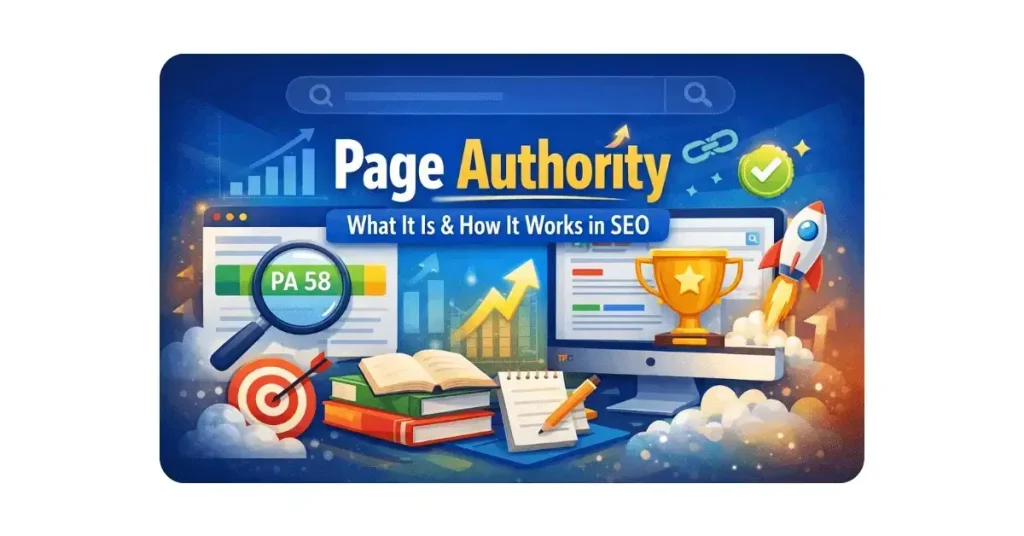
Page Authority in SEO is a simple score that shows how strong a single page on your website is. If Domain Authority measures the entire site, Page Authority focuses on a single page. This score helps you understand which pages have the best chance to rank on search engines. It is a helpful metric for beginners who want to track content performance and improve ranking potential.
Page Authority is created by Moz. It is not a Google ranking factor, but it is a good way to estimate the strength of your content. A higher Page Authority score usually indicates that the page has stronger backlinks, better structure, and stronger trust signals.
Table of Contents
What Page Authority Means
Page Authority is a score from 0 to 100. A higher score means a stronger page. This score is based on signals such as linking domains, link quality, and how your page fits within your website’s structure.
This metric helps you see:
- Which pages are strongest
- Which pages need better backlinks
- Which pages already attract organic attention
- How certain pages compare to competitors
You can use this score to improve your internal linking strategy and strengthen important pages.
Page Authority in SEO
Page Authority plays a helpful role in SEO by indicating which of your pages are more likely to rank. Many new bloggers think only Domain Authority matters, but Page Authority tells you the real story at the page level.
If a page has high Page Authority, it means:
- It has strong backlinks
- It is well structured
- It has clear internal links
- It provides useful content
If a page has low Page Authority, it may need more backlinks or internal links to grow.
Beginners often see better results when they improve individual pages instead of worrying only about the domain.
Domain Authority and Page Authority: How They Work Together
Domain Authority and Page Authority measure different things, but they support each other.
Here is the simple idea.
Domain Authority shows your overall site strength.
Page Authority indicates a page’s ranking power.
When your Domain Authority grows, your Page Authority in SEO can also grow. When a single page has many strong backlinks, that page can improve your Domain Authority, too. Both scores influence each other and help you understand your site’s structure.
For example:
- A new blog may have low Domain Authority, but a few pages can still rank well if they have strong Page Authority.
- A mature website with high Domain Authority will naturally give every new post a small ranking advantage.
Tracking both scores gives you a complete picture of your progress.
What Affects Page Authority
Several factors help improve page authority in SEO.
Important signals include:
- Quality backlinks pointing to the page
- Relevant internal links
- Clear content structure
- Strong user experience
- Low spam scores
- Fresh and updated information
If your page answers questions completely and gets mentioned by other blogs, its Page Authority will grow.
How to Improve Page Authority in SEO
You can improve page authority in SEO with simple actions that beginners can follow.
- Build backlinks to that page.
Guest posts, collaborations, or resource links help strengthen the specific page. - Add strong internal links.
Link from related posts to your target page. Use clear anchor text so search engines understand the connection. - Update the page regularly.
Fresh content increases trust. Add new examples, update screenshots, or rewrite confusing parts. - Improve on-page SEO
Use simple headings, short paragraphs, and clear answers. Good readability supports SEO. - Reduce unnecessary clutter
Fix broken links, outdated widgets, or unnecessary elements that slow down your page.
Small improvements can lead to significant change over a few months.
How to Check Page Authority in SEO
You can check your score using Moz’s tools. Many free tools offer basic page authority checks. Some tools also show backlinks pointing to each page, which helps you understand why certain pages perform better.
Check your scores once every month.
Do not check daily.
These scores change slowly, and that is normal.
Why Page Authority Matters for Beginners
Page Authority helps beginners focus on individual posts. Instead of trying to grow everything at once, you can pick one or two important posts and improve their authority.
This approach works well for:
- Affiliate review pages
- Comparison guides
- Tutorials
- Long-form educational posts
If you build authority for your best content, your whole website benefits.
Final Thoughts
Page Authority in SEO is a simple but powerful metric for beginners. It shows how strong each page is and helps you understand where to focus your link-building efforts.
When you improve the authority of your key pages, you improve your chances of ranking for competitive keywords.
- Focus on helpful content.
- Add clean internal links.
- Build quality backlinks.
- Update your posts regularly.
Resources I Use to Understand Page Authority in SEO
When I first heard about Page Authority in SEO, I didn’t really get it.
Different tools. Different explanations. Too much noise.
So I stick to a few trusted sources.
These are the ones I personally check whenever I need clarity.
Moz: Page Authority in SEO Explained
Page Authority comes from Moz, so this is always my first stop.
I like this guide because:
- It explains Page Authority in simple language
- It shows how the score changes over time
- It helps beginners understand what really affects a page
For the official explanation, please start here. Learn what Page Authority really means
Google Search Central: What Google Actually Cares About
This resource from Google Search Central helped me stop chasing wrong metrics.
It helped me understand:
- Page Authority is not a Google ranking factor
- Content quality and links matter more
- Why tools should guide you, not control you
Whenever I feel lost, I return here to reset my perspective. See how Google explains ranking systems
Ahrefs: Page-Level SEO and Link Strength
I use Ahrefs to understand how backlinks affect a single page.
Their explanations helped me:
- See why some pages rank faster than others
- Understand page-level link power
- Learn how links improve specific blog posts
This is useful when you start focusing on ranking one post at a time. Check how Ahrefs defines page-level metrics
My Honest Take
Page Authority in SEO is a helpful signal, not a magic number.
I use it to:
- Compare my pages
- Decide which post needs more links
- Track improvement over time
But I always follow Google’s rules first and use tools only for direction.
👉 Next step: Pick one important post on your site and improve its internal links today.
That’s how I move forward. One page at a time.
If you’re interested in learning more about SEO, check out my Complete SEO Guide for a better understanding.
Frequently Asked Questions
1. What is Page Authority?
Page Authority is a score that shows how strong a single page is.
It predicts how likely that page can rank in search results.
The score ranges from 0 to 100.
Higher usually means stronger.
2. What is a good Page Authority score?
There is no perfect number.
Here is a simple way to think about it:
0–20: New or weak page
20–40: Growing page
40–60: Strong page
60+: Very competitive page
For beginners, 20–30 is normal and totally fine.
3. How to check Page Authority for free?
You can check this using free tools.
Popular options:
Moz Link Explorer (limited free checks)
SEO browser extensions
Free PA checker websites
Do not check daily.
Once a month is enough.
4. Where to check Page Authority in SEO?
It comes from Moz.
You can check it using:
Moz Link Explorer
MozBar browser extension
Other tools may show similar scores, but PA is a Moz metric.
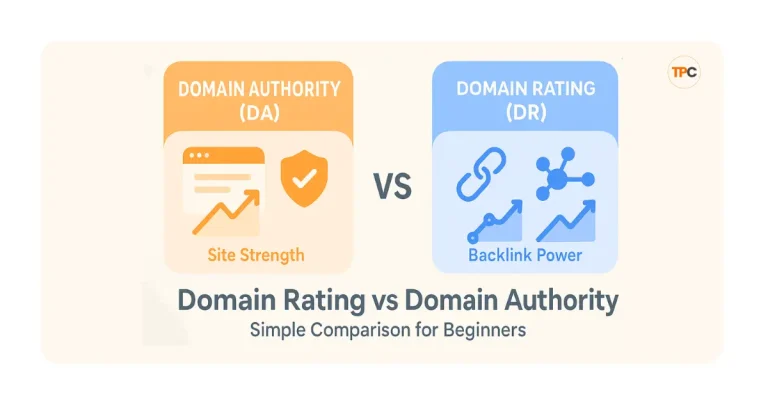
5. Page Authority vs Domain Authority. What is the difference?
The difference is simple.
Page Authority measures one page
Domain Authority measures the whole website
A site can have low DA but still rank with a strong page.
6. Should I focus on DA or DR?
If you are a beginner, focus on Page Authority first.
Why?
You rank pages, not domains
You can improve one page faster
It helps affiliate and tutorial posts
DA and DR matter later.
Pages matter now.
7. Page Authority example?
Example:
Your site DA is 15.
One blog post gets backlinks and internal links.
That page PA becomes 28.
That single page can rank even if the site is new.
This happens often.
8. How does Google determine the authority of a page?
Google does not use Page Authorityin SEO.
Google looks at:
Quality backlinks
Helpful content
Internal links
User experience
Trust signals
Page Authority in SEO just estimates these signals.
9. What is authority in SEO?
Authority means trust and strength.
In SEO, authority comes from:
Good content
Quality links
Clean site structure
Time and consistency
More trust usually means better rankings.
10. What are the 4 types of SEO?
11. Is Page Authority a Google ranking factor?
No.
Page Authority is not a Google ranking factor.
It is a third-party metric.
Use it as a guide.
Not as a rule.
12. Can Page Authority in SEO increase over time?
Yes. Slowly.
It increases when you:
Build quality backlinks
Add strong internal links
Update and improve content
Patience matters here.
Quick Reminder
Do not chase scores.
Chase helpful content.
Strong pages come from:
- Clear answers
- Clean structure
- Real value
That is what I focus on too.