

Keywords and Intent: 7 Powerful SEO Strategies for Beginners
Learning keywords is the first step in simple SEO. Keywords help Google understand your content and help the right people find you.
When you know how to use them, your blog becomes clearer, more useful, and easier to rank. This short guide gives you the basics in a friendly way. Each part can link to your longer guides, so beginners can go deeper when they are ready.
Table of Contents
1. Keyword Placement
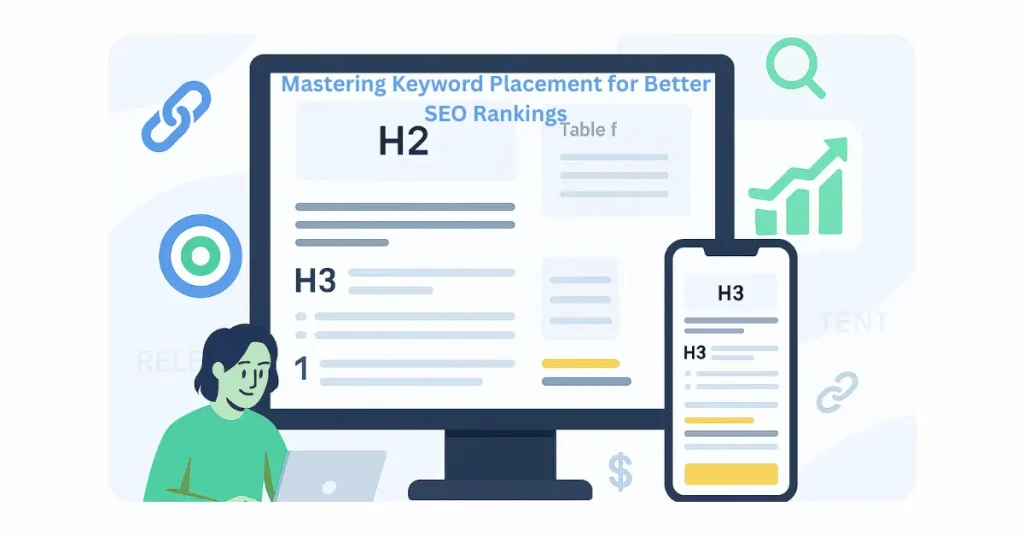
Keyword placement is where you put your main keyword on the page. Think of your keyword like the label on a box. If the label is in front, everyone knows what is inside. If the label is hidden inside the box, no one understands the topic.
So placement is critical. It tells Google the topic of your content in seconds. It also helps the reader see that your post answers their problem.
Your keyword should appear in the most critical places.
- Start with the title. Add it in the H1 heading.
- And place it in the URL.
- Use it once in the first paragraph.
- Add it in one heading like an H2.
- Use it in the alt text of one image.
- Add it again in the meta description.
These simple placements help your page rank for your chosen topic.
You do not need to add the keyword everywhere. Use it in strong places. Then use related terms in the rest of the content. This keeps the flow natural.
Beginners often think they must repeat the keyword many times, but that is not needed. Good placement is enough.
If you want a deeper look at this topic, you can check the long keyword placement guide for more examples and step-by-step notes.
2. Keyword Density
Keyword density shows how often you use your primary keyword inside the full content. The idea is simple. If the keyword appears too frequently, it feels heavy. If it seems too little, Google cannot see the topic clearly. The sweet spot is safe and natural use.
A simple range is one to two per cent. This means if you write one hundred words, your keyword can appear once or twice. If you write one thousand words, your keyword can appear ten to twenty times. But this is a guideline, not a strict rule. What matters more is how the content feels when someone reads it.
Always write your content first. Do not worry about density while writing. Tell the story. Help the reader. Teach the topic. After that, reread your content. If the keyword feels repeated too often, remove some instances. Replace a few with related words. When the content reads smoothly, your density is safe.
Keyword density works well when you already follow good keyword placement. The combination makes your content clear and natural. You can learn more in the full keyword density breakdown, where I show simple examples and common mistakes beginners make.
3. Keyword Optimization
Keyword optimisation is the process of choosing the right keywords and using them effectively. This includes choosing a primary keyword, selecting related long-tail phrases, matching search intent, placing keywords in strong spots, and writing content that fits what people want.
Think of optimization like building a small shop. You choose a clear sign so people know what you sell. You also select items that match each other. Everything must fit together. Your content works the same way. The keyword and the content must match.
Start with one main keyword. Then choose a few long phrases that support it. These long phrases help you rank for more searches. For example, if your main keyword is SEO tips for beginners, your long phrases can be simple SEO tips or improve ranking for new blogs. Use them where they fit. They make your post complete and easy for Google to understand.
Good optimisation is natural. It never feels forced. Your content should answer fundamental questions and help absolute beginners. If a beginner reads the post and feels clear and confident, your optimisation is already successful.
If you want all the steps in one place, my extended keyword optimization guide covers everything in detail.
4. Understanding Search Intent

Search intent refers to the real goal behind a keyword. People do not search random words. They search because they want something. Your content must match what they want, or they will leave the page within seconds.
There are three simple types of search intent.
There is informational intent. This is when people want to learn something. They need steps, examples, and notes that explain each step.
There is commercial intent. This is when people compare items before making a choice. They want lists, pros and cons, and honest reviews.
There is transactional intent. This is when someone is ready to take action. They want deals, sign-up links, or clear instructions to buy.
Before writing any post, always check the intent. Type the keyword into Google. Look at the first page. What type of content shows up? Are they guides? Are they tool lists? Are they reviews? The pattern tells you the intent.
Your content must match that pattern. If people want a guide, give a guide. If people want a list, provide a list. If people want a review, give an honest review. When you match intent, your reader feels at home. They stay longer, scroll more, and trust you more. This also sends sound signals to Google.
If you want to explore search intent further, my full intent guide provides clear examples and writing templates you can follow.
5. Semantic Keywords
Semantic keywords are words that connect to your main topic. They help Google understand the whole meaning of your post. They also help the reader understand the subject without feeling confused.
For example, if your main topic is SEO, you will also talk about ranking, traffic, keywords, Google search, and internal links. These words appear naturally when you teach SEO. You do not need to force them. They show that your content covers all parts of the topic.
Google reads your page like a person. When it sees many related words, it learns fast. It understands your content as a complete picture rather than a collection of repeated keywords. This helps your page rank for many related terms and not just one phrase.
You can find semantic keywords by doing a simple Google search. Look at the People Also Ask section. Scroll to the related searches. Read the top results and notice which words repeat. These repeated words are usually strong semantic terms.
Use these words where they fit. Please put them in headings, examples, sentences, and image alt text. They make your content rich but still simple. You can learn more examples in my complete semantic keyword guide.
6. LSI Keywords
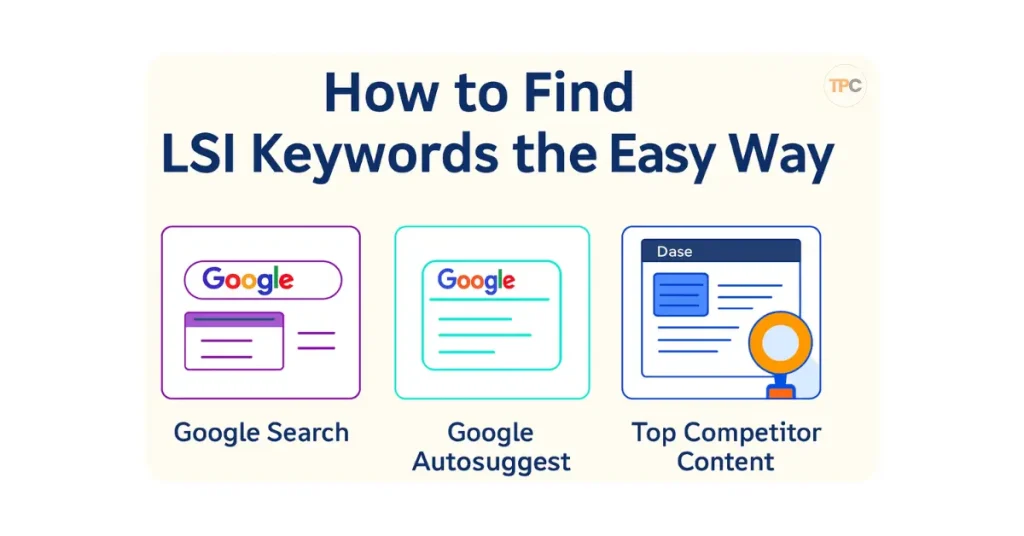
LSI keywords are related phrases that give depth to your topic. They work like supporting details. They create clarity for both the reader and Google. They are not synonyms. They are natural terms that appear in honest conversations about the topic.
For example, if you write about affiliate marketing, you will use words like commission, passive income, niche, product review, traffic, and content. These are LSI keywords. They show the whole world around the main keyword.
You do not need to place them in special spots. You do not need to count them. You use them naturally as you explain your topic. When your content feels full and clear, your LSI words are already doing their job.
Beginners often make a mistake by listing LSI keywords at the bottom of their posts. This is not needed. Instead, bring them into your writing through examples, steps, and questions. This keeps your blog friendly and valuable.
If you want to see real writing samples with LSI use, my larger LSI guide breaks everything down with simple examples.
7. Match User Intent
Matching user intent is all about understanding why someone searches for a particular keyword and ensuring your content directly answers that need. When you match the intent behind a search, you provide your content that serves the exact purpose the user had in mind.
Think of user intent like a customer walking into a store. If someone walks in asking for a pair of shoes, and you give them a coat, that’s not a good match. But if you give them exactly what they asked for, they’ll be satisfied and likely to return. The same goes for search engines. When the search query matches the content perfectly, users are more likely to stay on your page and trust your advice.
There are three main types of user intent:
- Informational Intent: The user wants to learn something.
- Example search: “How to start a blog”
- Your content should be a guide or tutorial that walks the user through starting a blog step by step.
- Commercial Intent: The user is comparing products or services before making a decision.
- Example search: “Best hosting for beginners”
- Your content should be a comparison or review that outlines the pros and cons of different hosting services.
- Transactional Intent: The user is ready to take action, such as purchasing or signing up.
- Example search: “Buy SEO tools”
- Your content should include a clear call to action that guides the user to make a purchase or sign up.
Before you start writing a post, check the first page of Google for the keyword. See if the content is a guide, a comparison, a review, or something else. This will help you match the user’s intent. For example, if the top results are mostly tutorials, your content should also be a step-by-step guide. If the results are product reviews, your content should offer a clear, honest review.
By aligning your content with the user’s intent, you increase your chances of ranking higher in search results and satisfying the searcher’s needs. This creates a better experience for the reader and sends positive signals to Google.
How do you align your content with user intent? Please read our detailed guide on Matching User Intent to improve your content’s relevance, drive better engagement, and boost rankings!
Final Notes for Beginners
Keywords and intent are the basis of easy SEO. You do not need complex tools to start. You only need simple habits. Pick one main keyword. Add it in strong places. Use related terms when they fit. Match the user intent. Keep the content simple. Write for real people who want easy answers.
When your content feels natural, Google will understand it. When your content aligns with the reader’s intent, readers will stay longer and trust you more. This is how your blog grows step by step.
If you want a deeper learning experience, you can explore the complete SEO guides linked from each section. They help you grow from a beginner to a confident writer without feeling lost.
Keywords and Intent SEO Navigation
Keyword Placement | Keyword Density | Keyword Optimization | Search Intent Matching | Semantic Keywords | LSI Keywords