
SEO Links and Navigation: 3 Simple SEO Guide for Beginners to Rank
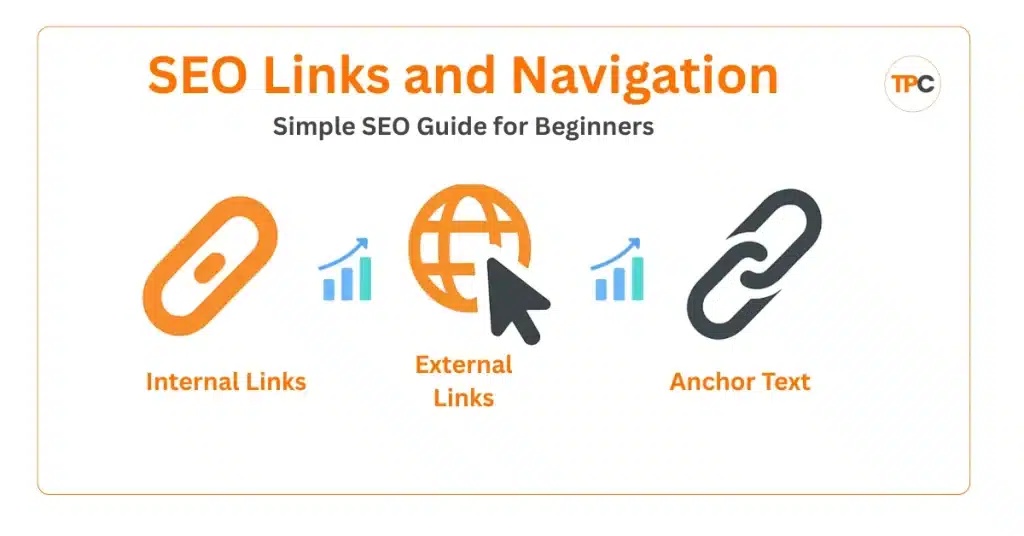
SEO Links and navigation determine how readers move through your website. They also guide Google when it tries to understand your content. This page provides a clear, friendly overview of the three main link types you will use on your site. When you know these basics, you can build a site that is easy to read and simple to rank.
You will also find a link to a complete, detailed guide under each section if you want to explore the topic in more depth.
Table of Contents
1. Internal Links
Internal links connect one page on your site to another. They help both readers and search engines move around your content. A good internal link structure makes your site easier to explore and rank. Many beginners do not realize how powerful this simple habit can be.
When a reader arrives on your site, they want a smooth and straightforward path. Internal links show them what to read next. A clear link at the right moment can keep a reader on your site for much longer. This extra time creates a strong trust signal for Google.
Google also depends on internal links to find and understand your pages. It moves through your site by following links. If your pages innovatively link to each other, Google can better understand your topics. If you forget to link to a page, Google may ignore it. This is common with new blogs. Many pages stay hidden because no link points to them.
Think of your website as a small town. Every page is a house. Internal links are the roads. When your town has many simple roads, it is easy to travel. When your town has no roads, it isn’t very clear. This is what happens to sites that ignore internal linking.
You do not need many internal links to start. A simple rule is to aim for three to five internal links per post. You can add more in long guides and fewer in short posts. The goal is to help the reader link only when the link adds value. A helpful link is suitable for people and good for SEO.
Another essential habit is linking older posts to new posts. Beginners forget this step. They create a new post and only link out from that post. This helps, but does not complete the structure. When you also update older posts and link them to your new post, you create a two-way connection. This gives your latest post a boost. Google can see that other pages support it.
Internal links also help you build topic clusters. A topic cluster is a group of posts around one main idea. For example, you may have a keyword research guide at the top and several smaller posts that cover tools, steps, and mistakes. When all posts link to each other, Google sees a strong cluster. This improves your chance of ranking for many related keywords.
Internal links are one of the most manageable SEO tasks for beginners. You do not need any tools. You only need a clear plan. When you follow the same simple routine for every post, your site becomes stronger over time.
Read the complete guide here:
Internal Links for Beginners: Simple Guide to Better SEO
2. External Links
External links send your reader to another website. This may be a Google tool, a trusted SEO blog, or an official WordPress page. Many beginners worry that external links will send their visitors away. This fear is common, but it is not correct. External links can make your content more helpful and more trustworthy.
A good external link supports your explanation. When you link to a reliable source, you show the reader where your information comes from. This builds trust. Readers stay longer when they feel safe. This is a strong signal for search engines.
Google also uses external links to understand your topic. When you link to high-quality sites that match your subject, Google can better understand your page. For example, if you write a post about image SEO and link to Google PageSpeed Insights, Google knows that your page talks about performance. If you write about WordPress and link to a plugin page, Google knows that your content relates to WordPress tools.
The goal with external links is quality, not quantity. You can add one to three links per post. These links should come from sites you trust. Do not link to spam or low-quality sites. Choose clean and stable sources. This keeps your site safe.
External links are also a simple way to support your E E A T signals. E E A T stands for Experience, Expertise, Authoritativeness, and Trust. When you link to trusted sources, your content feels more complete. It shows that your advice is based on real information and not guesswork.
You can add external links easily in WordPress. Highlight the text. Click the link icon. Paste the URL. Choose to open the link in a new tab so your reader does not lose their place. Use clear anchor text so readers know what the link is about.
Another good habit is checking your external links every few months. Sometimes links break, or sites change. A broken link hurts the reader’s experience. Tools like Google Search Console and the Dead Link Checker can help you quickly find broken links.
If you want to go one step deeper, you can track outbound link clicks. This tells you what your readers find useful. If many readers click a specific tool link, you may create more content on that topic.
External links are simple to use and bring substantial SEO benefits. You only need to choose trusted sites and place the link naturally.
Read the complete guide here:
External Links and Outbound Links for SEO: Beginner Guide
3. Anchor Text
Anchor text is the clickable text inside your links. It tells your reader where the link leads. It also tells Google what the linked page is about. Anchor text is small but very powerful. It controls how your links communicate with people and search engines.
When a reader sees a link, they decide whether to click based on the anchor text. If the text is clear, they feel comfortable. If the text is vague, they feel confused. Clear anchor text builds trust and improves the reader experience.
Google also reads anchor text. It uses these words to understand your topics. When you use clear anchor text, Google sees a stronger structure. This helps your pages rank for the right keywords.
There are different types of anchor text. Exact-match anchor text matches the page’s exact keyword. Partial match anchor text includes the keyword and extra words. Branded anchor text uses a brand name. Generic anchor text often uses words like “click here” or “read more.”
For beginners, the best type is natural anchor text. This is simple and part of the sentence. It does not feel forced. It does not look spammy. It describes the page with everyday words.
Anchor text becomes stronger when it matches the target of the link. If you link to a keyword research guide, use words that include keyword research. If you link to a tutorial, use words that show it is a tutorial. Matching anchor text helps both readers and Google.
You should avoid using the exact anchor text every time. Use small variations. Variations make your site look natural. Repeating the exact phrase over and over again seems forced and does not help SEO.
Anchor text is essential for both internal links and external links. It is also important to have backlinks from other sites. You cannot control every backlink, but you can control your own internal links. This gives you a decisive advantage. A single page can gain more power when many internal links point to it, using clear, natural anchor text.
You do not need a tool to manage anchor text. You only need awareness. Write your sentence first. Then choose the words that guide the reader to the next page. Please keep it simple.
Anchor text is a small skill with a significant impact. When you use it well, your links become stronger, and your site becomes easier to rank.
Read the complete guide here:
Anchor Text for SEO: Beginners’ Best Guide
Final Thoughts
Links and navigation form the base of a healthy website. Internal links help readers explore your content. External links support your information. Anchor text explains your links clearly. These three skills work together. You cannot build a strong site without them.
Start small. Add a few clear links in each post. Use simple anchor text, link to trusted sites. With time, these habits will give your site a clean structure. They will also help your content rank faster and last longer.
If you’re interested in learning more about SEO, check out my Complete SEO Guide for a better understanding.
Google studies the words inside your links to understand your content. If you want to see the official explanation you can read this short guide from Google Search Central. It helps you understand how anchor text supports your rankings.
Visit: How Google Reads Anchor Text