
Recurring LTV Calculator for SaaS and Affiliates [Free Tool]
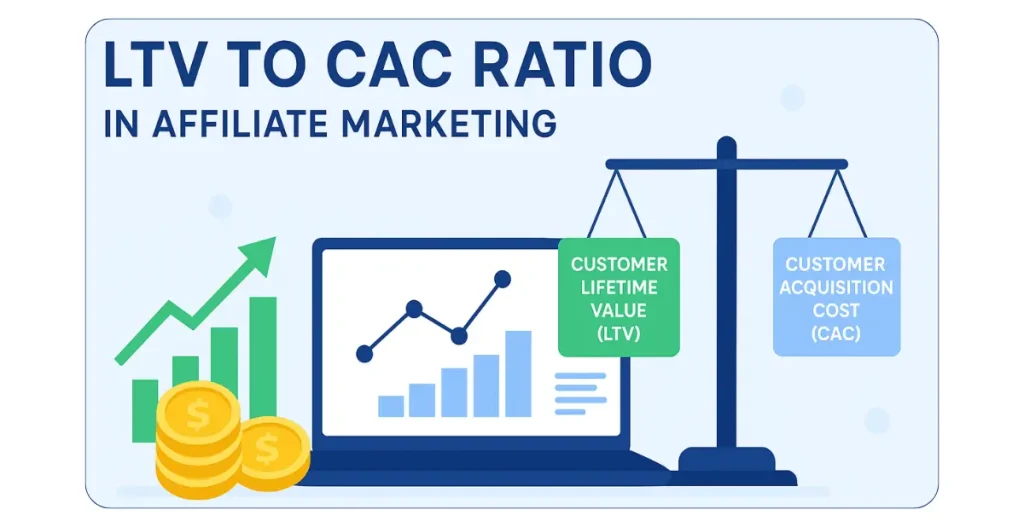
Want to know how to calculate recurring LTV for your SaaS or affiliate programs? This free recurring LTV calculator helps you see the real value of each customer or referral over time. Whether you run a subscription-based business or promote recurring affiliate offers, this simple SaaS LTV calculator shows how churn, refunds, and rebills affect your lifetime value and payback period, so you can pick offers that truly profit.
Recurring LTV = first month net + expected rebills net.
Rebills net uses churn and refund.
Table of Contents
What is Recurring LTV?
Recurring LTV means lifetime value from recurring income.
It shows how much money you earn from one customer or referral over time.
This is important for:
- SaaS products that use monthly subscriptions.
- Recurring affiliate programs that pay commissions each month.
A recurring LTV calculator helps you:
- Compare different offers.
- Set smarter ad bids.
- Plan your growth and goals.
People also call it:
- Subscription LTV calculator
- LTV churn calculator
- Rebill calculator
It’s one of the best ways to see the real value of each signup.
How the Calculator Works
You just enter a few simple numbers. The SaaS LTV calculator then shows how much each referral is worth.
Inputs:
- Base payout (month 1) – what you earn from the first payment.
- Rebill payout (per month) – monthly recurring commission or payment.
- Churn rate – how many users stop paying each month.
- Refund rate – how many customers ask for a refund.
- Months to model – how many months to project.
- CAC (optional) – cost to acquire one customer.
Outputs:
- Expected rebills – average number of monthly payments you’ll get.
- LTV per referral – total value from one user.
- Payback time – how long before you recover CAC.
This customer lifetime value calculator for subscription helps you make data-based decisions. You’ll know which offers are profitable and which to skip.
The Formula
Let churn = c.
Retention = r = 1 − c.
Months = N.
Rebill months = k = N − 1.
Expected rebills = r × (1 − rᵏ) / c
Net base = Base × (1 − refund)
Net rebill = Rebill × (1 − refund)
LTV = Net base + Net rebill × Expected rebills
The payback month is when your total earnings first reach your CAC.
This is how the payback period calculator for subscription works.
Example with Real Numbers
Try these numbers in the recurring LTV calculator:
- Base payout: $60
- Rebill payout: $20
- Churn: 15%
- Refund: 5%
- Months: 12
- CAC: $2
Results:
- Expected rebills: 4.72
- LTV per referral: $146.65
- Payback time: 1 month
You can see it’s a strong offer.
You recover your cost fast.
Low churn means higher profit.
Even small changes in churn make a big difference to your recurring LTV.
How to Calculate LTV for SaaS Step by Step
If you’re wondering how to calculate LTV SaaS, follow these easy steps.
- Find your base income per user or per referral.
- Note your monthly rebill income.
- Check your monthly churn rate. Use the last 90 days for better accuracy.
- Add your refund rate.
- Pick the number of months to model.
- Enter all numbers into the SaaS LTV calculator.
- If you know your CAC, include it to see the payback period.
Pro tip:
Even a small drop in churn increases LTV a lot.
Work on better onboarding, habit loops, and smooth billing.
These steps make calculating LTV SaaS simple and practical.
Why Churn Matters for Recurring LTV
Churn is the main factor that decides your recurring LTV.
- High churn = short customer life = low LTV.
- Low churn = long customer life = high LTV.
A 5% drop in churn can increase your LTV by 20% or more.
Refunds also reduce LTV, but churn has a bigger impact.
That’s why LTV churn calculators are so useful.
They show how small improvements can make a big profit difference.
Use Cases
You can use this recurring LTV calculator in many ways:
- Affiliate commission LTV calculator: Compare different recurring affiliate programs.
- Payback period calculator for subscription: Check if paid ads are worth it.
- Pricing checks: See if rebill share beats a one-time bounty.
- Goal planning: Find how many clicks you need to reach your target.
A simple rebill calculator can save you from picking low-value offers.
Avoid the Wrong LTV
Be clear — this post talks about lifetime value (LTV) in marketing and SaaS.
It’s not about loan-to-value used in banks or real estate.
If you target broad keywords like “LTV calculator,” explain this early in your blog.
This helps search engines and readers understand your topic better.
Benchmarks to Try
These are good starting points when using a subscription LTV calculator:
- New SaaS: churn 10–20% per month
- Mature SaaS: churn 3–8% per month
- Refunds (digital tools): 2–8%
Run a few tests with different numbers.
See how churn and refunds affect your customer lifetime value calculator for subscription.
You’ll learn fast what makes an offer profitable.
FAQs- Recurring LTV Calculator for SaaS and Affiliates
What is a good LTV to CAC ratio?
A healthy LTV to CAC ratio means your earnings from each customer are much higher than what you spent to get them.
Aim for 3:1 or better. That means you earn $3 for every $1 spent.
Early-stage offers or new ads can start at 2:1, as long as payback is quick.
If it’s 1:1 or less, you’re losing money.
Too high (like 6:1) might mean you’re not investing enough in marketing.
Tip: Track this every few months using a recurring LTV calculator or SaaS LTV calculator.
What is a healthy payback time?
Payback time tells how fast your earnings cover your ad or customer cost.
Under 3 months is great for affiliates and small SaaS.
Under 1 month is amazing for scaling fast with paid traffic.
If it takes more than 12 months, you may need to reduce CAC or churn.
A payback period calculator for subscriptions can help you see this instantly.
Should I count refunds?
Yes — always.
Refunds show real money that stays in your pocket. Ignoring them makes your numbers fake.
Use net income after refunds for both the base and rebill.
This gives an honest picture of ROI and recurring LTV.
How many months should I model?
Start with 12 months. That’s enough to see patterns.
If your churn is low (under 5%), go for 24 months or more.
If churn is high (above 15%), shorter models (6–12 months) make sense.
What happens if churn is high?
High churn kills your rebills and your LTV drops fast.
For example, a 20% churn means users leave after 5 months on average.
A 5% churn can stretch their life to almost 20 months.
That’s a massive difference.
Tip: Reduce churn by improving onboarding, support, and reminders. Use an LTV churn calculator to see how every small drop helps.
What’s the difference between LTV and recurring LTV?
LTV means the total money you earn from one customer.
Recurring LTV focuses only on subscriptions and rebills.
It’s the real lifetime value for SaaS and recurring affiliate programs.
Use a recurring LTV calculator or subscription LTV calculator for those cases.
How do I include annual plans in the model?
If a customer pays yearly, divide that payment into monthly parts.
Example: $240 per year = $20 per month.
Then enter that as your rebill payout in the SaaS LTV calculator.
For refunds or churn, use yearly rates instead of monthly.
What’s a good churn rate for SaaS?
Here’s a quick guide:
New SaaS: 10–20% monthly churn is normal.
Established SaaS: 3–8% monthly churn.
World-class retention: Under 3%.
Even small churn improvements raise LTV a lot. Always test and track using your LTV churn calculator.
What’s a good refund rate for affiliates or SaaS tools?
Digital tools: 2–8% refund rate.
Low-quality or misleading offers: 10–20%.
Goal: Keep refunds below 5%.
If refunds rise, check your landing page promises, user onboarding, or product match.
Can I use this calculator for one-time offers?
You can, but it’s not ideal.
If you don’t have rebills, your recurring LTV equals your first payout (minus refunds).
For one-time bounties, focus on simple ROI instead of full LTV.
Does this model work for affiliate marketing too?
Yes — perfectly.
A recurring affiliate program pays you for every month your referred customer stays.
You can plug your data into the affiliate commission LTV calculator to:
Compare programs
Test payout plans
Plan ad spend
This helps you find the highest-value affiliate offers.
How do I reduce churn and increase LTV?
Try these:
Improve user onboarding (show quick wins fast).
Send billing reminders before renewals.
Offer loyalty discounts or extra features.
Collect feedback and fix weak spots early.
Even a 3–5% churn drop can double your recurring LTV.
What is a good LTV for SaaS?
There’s no single number, but here’s a ballpark:
Low-cost SaaS: $100–$500 per customer.
Mid-tier SaaS: $500–$2,000.
Enterprise SaaS: $5,000+ per customer.
Use a SaaS LTV calculator to get your exact number, then optimize churn, pricing, or upgrades.
Why does retention matter so much in recurring income?
Retention means users keep paying.
It’s the opposite of churn.
Better retention means more rebills and a higher subscription LTV.
This is why big SaaS brands invest in customer success — it pays off long-term.
How often should I update my LTV model?
Check it every quarter.
Markets change. Refunds, churn, and CAC all move.
Updating your recurring LTV calculator helps you catch problems early and adjust your strategy.
What’s a quick formula to remember?
LTV = (Base payout × (1 – refund)) + (Rebill payout × (1 – refund) × Expected rebills)
That’s the same logic your calculator uses.
You just plug in churn, refund, and months — it does the m
Why do affiliates and SaaS founders love LTV modeling?
Because it turns guesswork into strategy.
You’ll know:
How much to spend to get a user.
How long to break even.
Which offers bring the best long-term profit.
It’s the simplest way to pick winners and scale confidently.
Useful Links: