This post may contain affiliate links. If you purchase through these links, I may earn a small commission at no extra cost to you. Read our full Affiliate Disclosure
What is a Funnel Builder and Why Beginners Need One (Simple Explanation)
A funnel builder is a tool that helps you guide visitors step by step toward a single goal. That goal could be collecting an email address, offering a free resource, or selling a product. The best funnel builder for beginners provides clear guidance to visitors. It displays the next steps right on the screen. This way, users don’t have to click through many pages.
I made this mistake myself at the beginning. I assumed that using a popular tool would automatically make things easier.
Instead, I spent days clicking through settings I didn’t understand and watching tutorials that felt too advanced. That confusion slowed me down more than any lack of motivation.
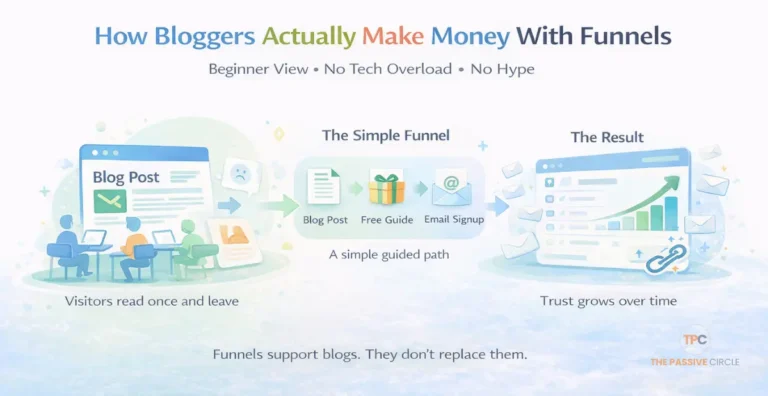
When I first started learning affiliate marketing as a beginner, that was the part I didn’t understand. I focused on writing content but had no system to capture leads. Visitors came, read, and left. For weeks, I kept checking analytics, wondering why traffic was increasing but nothing else was happening.
That’s when I realized why the best funnel builder for beginners isn’t about advanced features. It’s about having a simple system that turns traffic into something you can actually build on.
Table of Contents
How a Funnel Builder Works for Beginners (Step-by-Step)
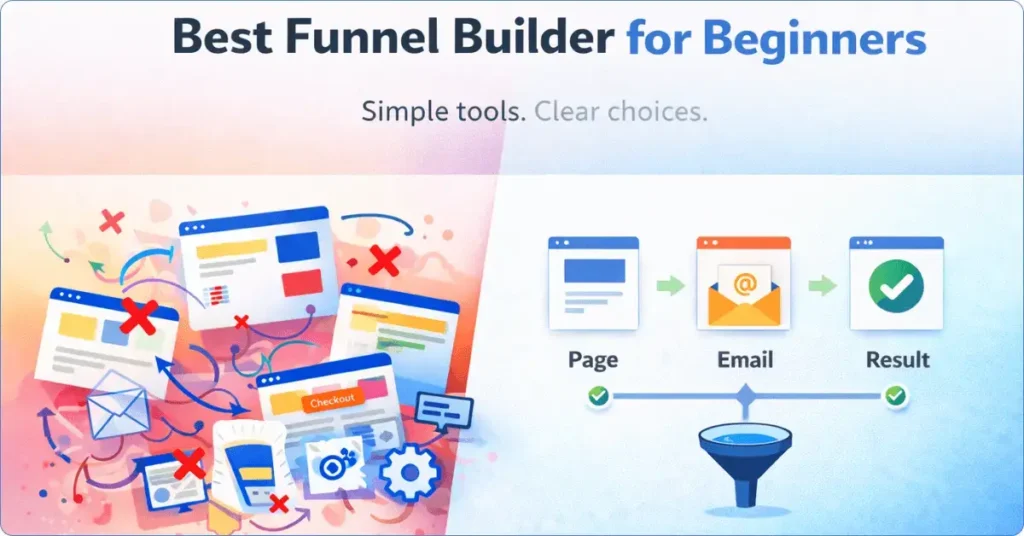
At its core, a funnel builder for beginners creates a simple path for visitors to take one clear action. Most beginner funnels look like this:
- A landing page with one clear message
- An email signup form
- A thank-you page or next step
Here, you can see a screenshot of the sales funnel in Systeme.io, which I’ve been using for a couple of months.
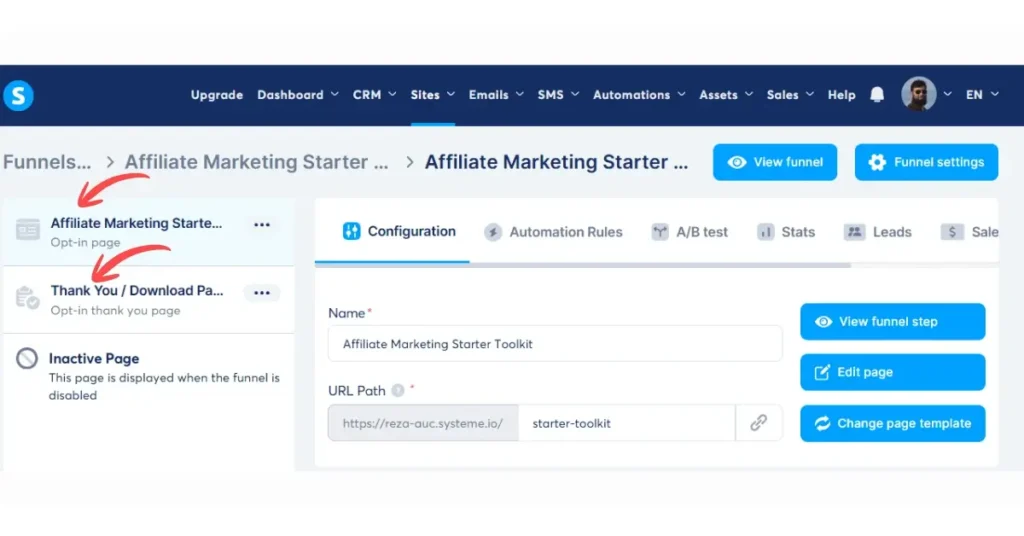
Everything is connected and focused on one action. You don’t need to design a full website or worry about complex layouts to get started.
If you’re new to affiliate marketing for beginners, this structure is much easier to manage than building dozens of pages in WordPress. It lets you focus on learning how traffic, email, and offers work together instead of getting stuck on design or setup.
Why beginners struggle without a funnel builder
Most beginners send traffic to blog posts or homepages. Those pages often have multiple links, menus, and distractions. As a result, visitors don’t know what to do next.
Without a funnel, beginners usually face these problems:
- No email list growth
- No follow-up system
- No way to build trust over time
Funnel Builder vs Website Builder (Beginner Comparison)
A website and a funnel serve different purposes. Understanding this early prevents a lot of confusion.
A website is great for publishing content, tutorials, and long-term SEO traffic. A funnel is designed for action. It removes distractions and focuses on one goal at a time.
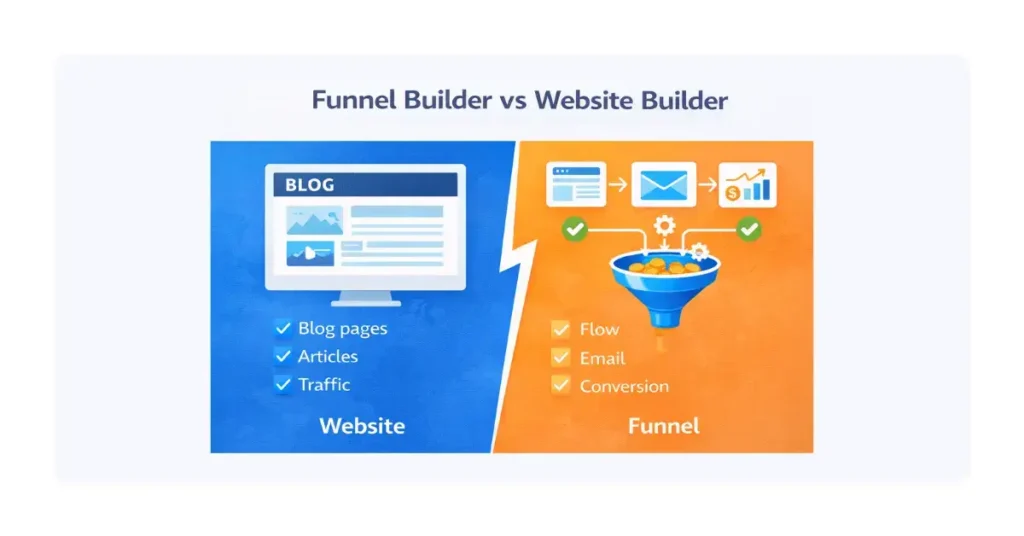
Here’s a simple comparison:
| Funnel Builder | Website Builder |
|---|---|
| One clear goal | Many pages and links |
| Fewer distractions | Multiple exits |
| Faster results | Slower, long-term growth |
| Email focused | Content focused |
Many beginners use both tools eventually. But starting with the right one is important.
A simple beginner example
Let’s say you want to give away a free checklist. A funnel builder lets you make a single page for your checklist. It collects visitors’ email addresses and sends the checklist without manual intervention.
You don’t need to worry about menus, themes, or advanced design. Everything is focused on helping the visitor take one clear action.
Funnel builders are great for beginners. They help you make progress without feeling overwhelmed.
Who This Guide Is For (And Who Should Skip It)
This guide is not written for everyone, and that’s intentional. Funnel builders are powerful, but they are not always the right starting point. Before selecting a tool, check if it fits your needs.
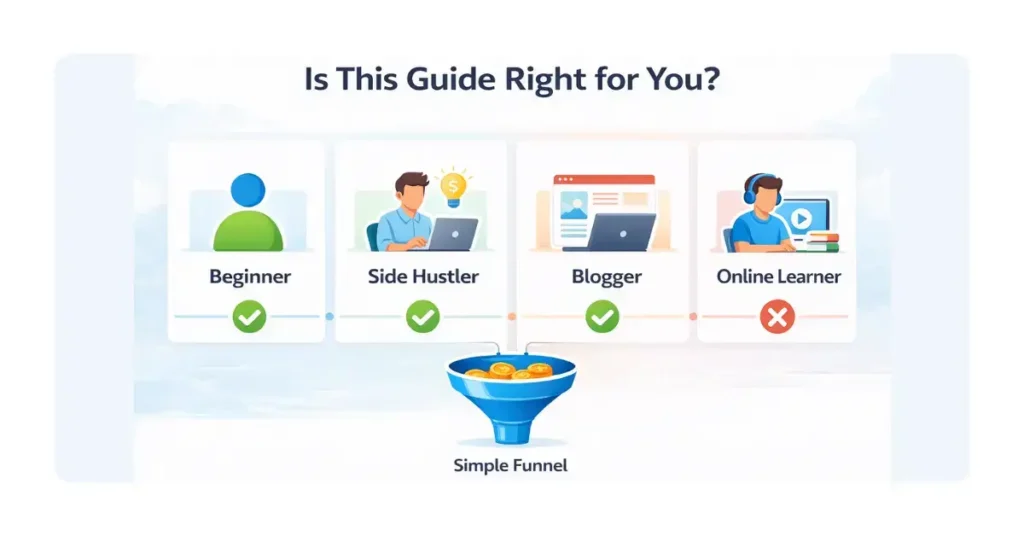
This guide is for you if
This guide will help you if you see yourself in any of these situations:
- You are starting from zero and feel lost choosing tools
- You want to test affiliate marketing or online income safely
- You are building a side hustle after work with limited time
- You already have a blog but struggle to collect emails
- You want a simple way to offer a freebie or one product
These were the exact problems I faced when I started learning funnels alongside my affiliate marketing journey.
This guide is NOT for you if
This guide may not be a good fit if:
- You already run advanced funnels or paid ad systems
- You manage clients or multiple business accounts
- You only want to write blog posts with no email strategy
- You enjoy complex tools and heavy customization
In these cases, beginner-friendly funnel builders may feel limiting.
Quick self-check before you continue
If your goal is learning and small progress, a funnel builder makes sense.
If your goal is content only, you can safely wait.
This guide helps beginners avoid unnecessary tools and focus on learning the funnel basics first.
Biggest Mistakes Beginners Make When Choosing a Funnel Builder
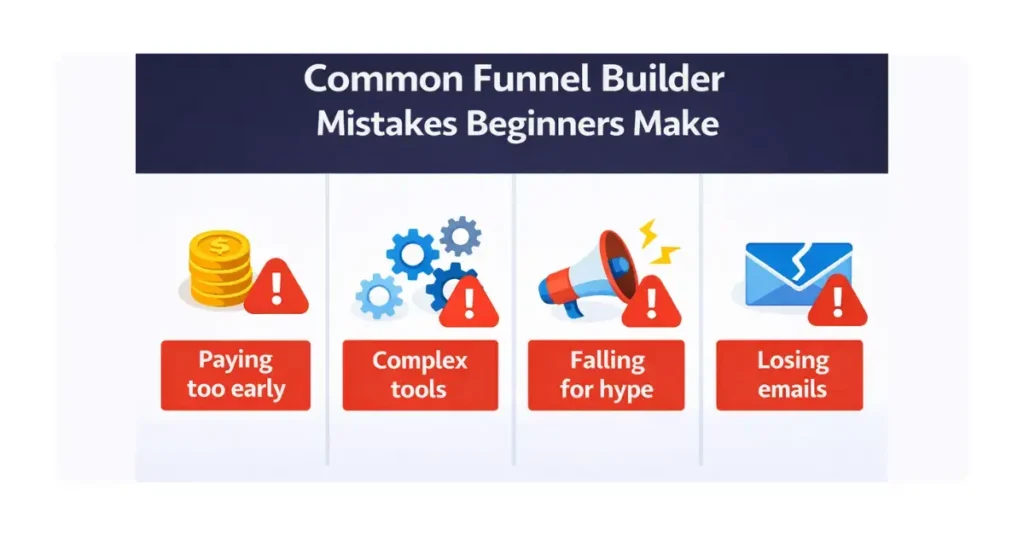
Most beginners don’t fail because they lack effort. They fail because they choose the wrong tool too early. I remember opening my first funnel tool and closing it again after ten minutes because I didn’t know where to start. I also made these mistakes when I started with funnels and affiliate marketing.
Understanding these mistakes upfront can save you time, money, and frustration.
Choosing a Funnel Builder Based on Hype
Many beginners prefer tools that are popular on YouTube or well-advertised. Big names look trustworthy, and bold promises sound convincing. Most experienced marketers make these tools, not beginners.
Common signs of hype-driven tools include:
- Too many features shown at once
- Complex dashboards with no clear starting point
- Heavy focus on upgrades instead of learning
For beginners, simplicity beats popularity every time.
Paying for a Tool Too Early
Another common mistake is upgrading before understanding how funnels work. I paid for a plan thinking it would push me to act, but instead I felt pressure to “make it worth the money.” Many beginners believe paying will “force” them to take action. In reality, it often creates stress and regret.
Paying too early usually leads to:
- Pressure to get results fast
- Fear of wasting money
- Overthinking instead of building
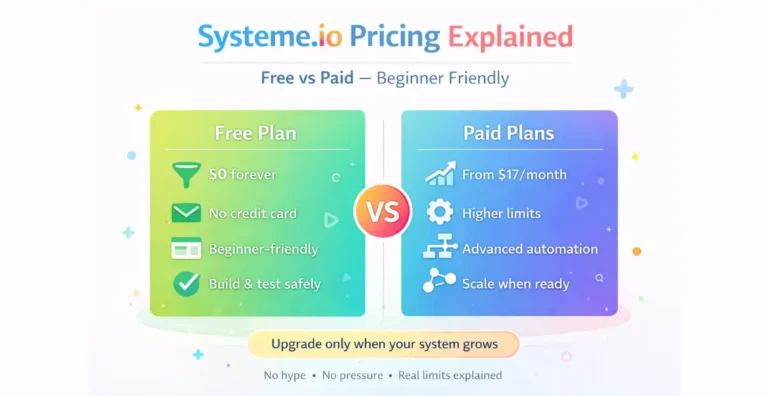
A free plan that allows real testing is usually the best place to start. Upgrade only when a tool’s limits actually stop your progress.
Picking Tools Made for Advanced Users
Some funnel builders are powerful, but power comes with complexity.
This often results in:
- Spending hours tweaking settings
- Building nothing useful
- Giving up before launching the first funnel
Beginner-friendly tools focus on doing a few things well, not everything at once.
Ignoring Email and Automation
Many beginners focus only on pages and design. They forget that funnels are systems, not just landing pages.
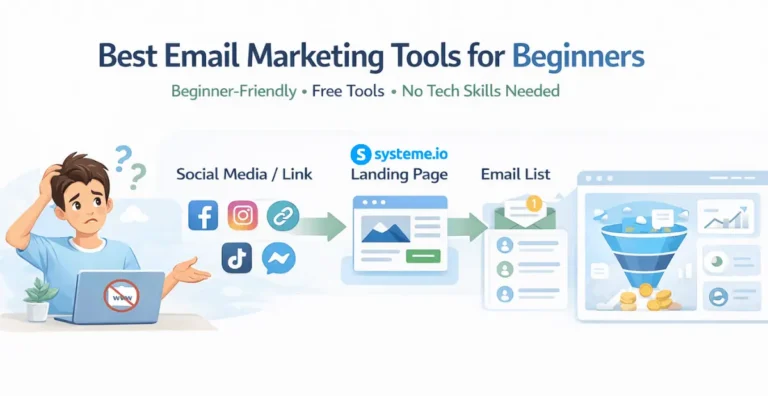
Without email follow-up, traffic disappears, which is why building your first email list matters so much for beginners.
Ignoring email usually means:
- No relationship with visitors
- No second chance to engage
- No long-term growth
Even a simple welcome email can make a big difference for beginners.
Email marketing remains one of the most reliable channels for building long-term relationships online.
Key Features Beginners Actually Need (Not the Fancy Ones)
Beginners often lose track when comparing funnel builders. They get caught up in advanced features. The truth is, you don’t need most of them at the beginning. What you need is a small set of features that help you learn, build, and launch without confusion.
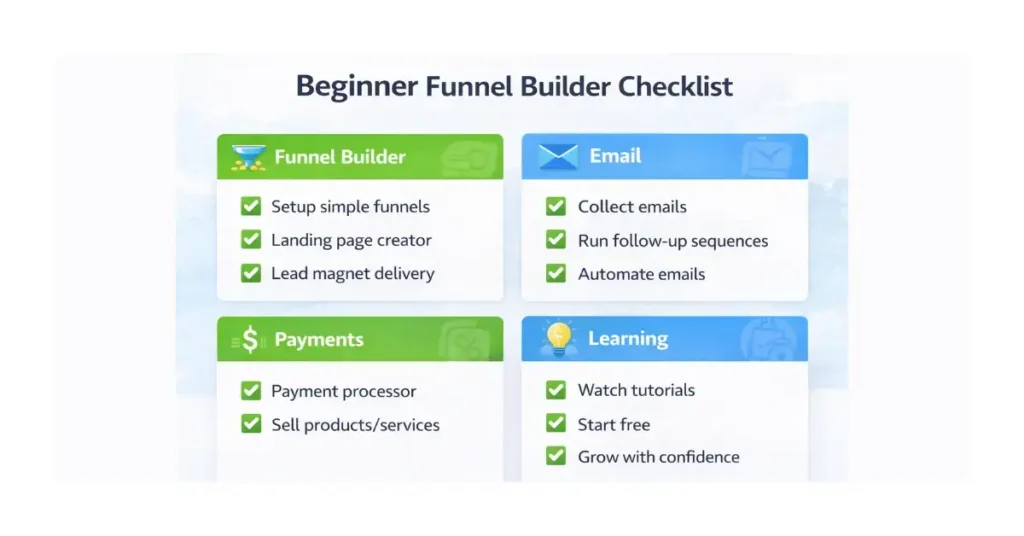
Use the checklist below to test any beginner-friendly funnel builder before choosing one.
Funnel Builder Basics Beginners Actually Use
At the beginner stage, the page builder should feel simple and predictable. You should be able to focus on your message, not on technical settings.
Key basics to look for:
- Drag-and-drop page editor with no coding required
- Clean, ready-made templates that already work
- Ability to publish pages quickly without extra setup
If a tool makes you think about layout more than content, it’s probably not beginner-friendly.
Email and Automation (Keep It Simple)
Email is where funnels start to make sense, but beginners don’t need complex automation. One or two basic emails are enough to begin.
Beginner-friendly email features include:
- A simple welcome email that sends automatically
- Basic follow-up emails without complex rules
- Email and funnel tools inside the same dashboard
Using separate tools too early often creates confusion and broken setups.
Payments and Products
If you plan to sell anything, even one small digital product, the setup should be simple. Beginners should not struggle with checkout systems or payment integrations.
Look for these essentials:
- Support for digital products like ebooks or guides
- Simple checkout pages
- Clear payment setup with minimal steps
This allows you to test selling without turning your funnel into a technical project.
Learning and Support
Support matters more than features when you’re new. Even the best affiliate tool becomes frustrating if you don’t know where to start.
Beginner-friendly tools usually offer:
- Short video tutorials instead of long manuals
- Clear onboarding steps
- An active community or help resources
When I was learning funnels alongside building my website the passive circle, tutorials and simple guides mattered far more than advanced options.
Free Funnel Builders for Beginners (Pros, Limits, and Real Use Cases)
A free funnel builder for beginners is often the safest way to start learning funnels. Starting with a free plan removed a lot of pressure for me. When no money was on the line, I felt more comfortable experimenting, breaking things, and starting over. That freedom helped me understand funnels faster than any paid course or feature-heavy tool. You can learn how funnels work without spending money or feeling rushed to succeed.
That said, free does not mean unlimited. Understanding the limits upfront helps you avoid frustration later.
What “Free” Truly Means for Beginners
Most free funnel builders come with boundaries. These limits are not bad. They exist to help you test the platform before upgrading.
Here’s what “free” usually includes and restricts:
- Page limits: You can build a few funnels or pages, not unlimited systems
- Contact limits: Email lists usually have a cap, which is normal for beginners
- Branding: Some tools add their logo to your pages
Designers create free plans for learning and testing, not for scaling a business..
Best Free Funnel Builder Options in 2026
Not all free funnel builders are equal. Some only offer landing pages, while others include email and selling features.
Option 1: All-in-one beginner platform
This is where an all-in-one funnel builder like Systeme.io fits well for beginners.
On the free plan, you can:
- Build simple funnels with landing pages
- Collect email addresses
- Send basic emails and follow-ups
- Sell a digital product
You don’t need to connect multiple tools or enter a credit card. This makes it ideal for beginners who want to understand the full funnel flow.
Option 2: Page-Focused Funnel Tools (Landing Pages Only)
Some beginner tools focus mainly on building landing pages. These platforms are useful if your only goal is to create a single page and connect it to another email tool later.
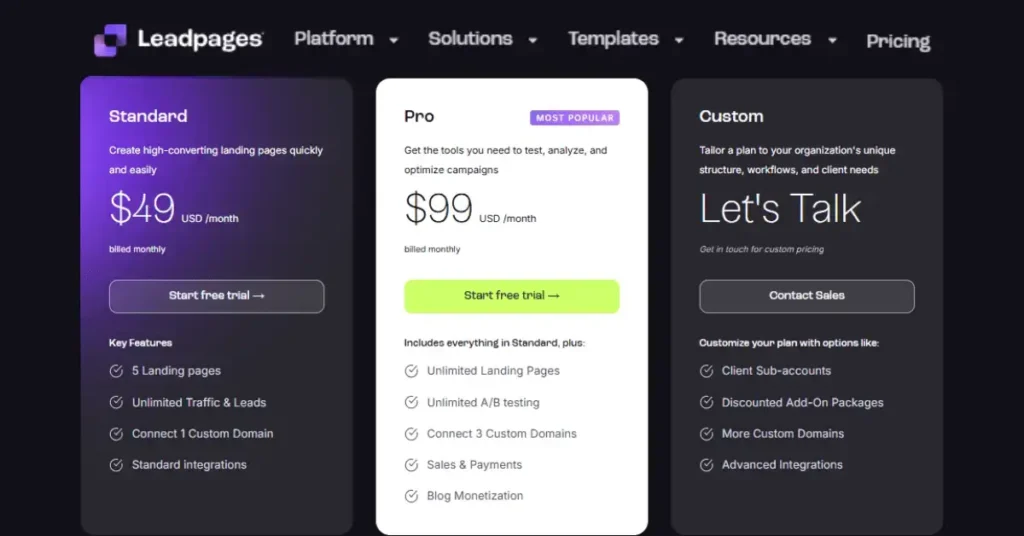
Examples of page-focused tools beginners often test include Leadpages and simple page builders like Carrd.
These tools usually work well for:
- Creating clean landing pages quickly
- Testing page design and messaging
- Connecting with external email tools
However, beginners should be aware of the limitations:
- Email automation often requires a separate tool
- Follow-ups and sequences are limited or unavailable
- Managing multiple tools can feel confusing early on
For beginners who want to learn the full funnel flow (pages, email, and follow-up in one place), page-only tools can feel incomplete.
Honest takeaway for beginners
Free funnel builders are not meant to run full businesses. They are learning tools. Use them right. They can teach you about funnels. They help you avoid mistakes. Plus, they build your confidence before you spend money.
If a free plan lets you build, test, and learn without pressure, it’s doing its job.
Paid Funnel Builders Worth Paying For as a Beginner
Free tools are helpful for learning. Yet, there’s a time when upgrading makes sense. The key is knowing when to pay and what you should expect in return. Beginners often upgrade too early or for the wrong reasons, which leads to regret.
This section helps you delay spending until it’s truly useful.
When It Makes Sense to Upgrade From a Free Plan
Upgrading usually makes sense after you reach a small but key milestone.
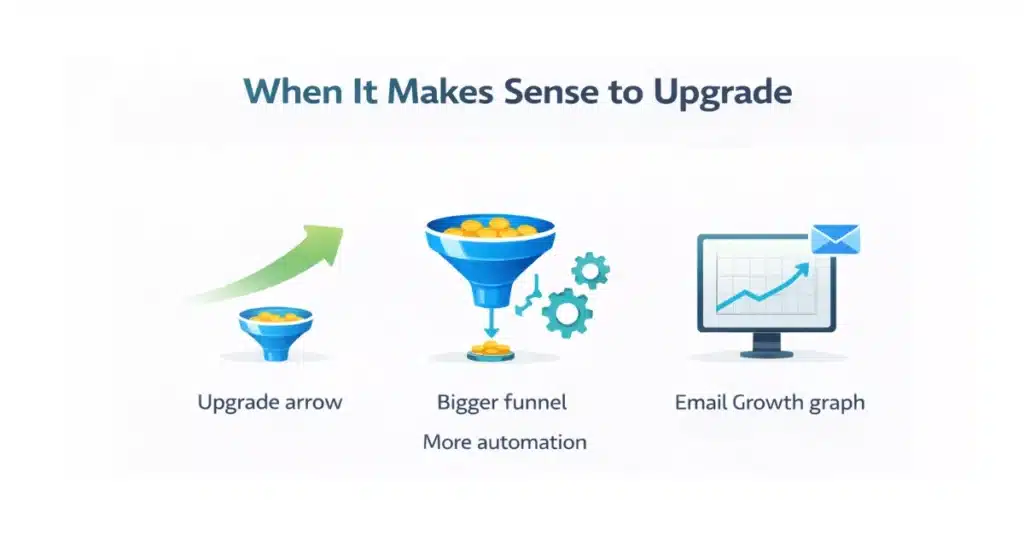
You should consider upgrading when:
- You have started building an email list and are close to the free limit
- You’ve made your first sale or validated your offer
- You want to save time by removing small restrictions
- You feel blocked by limits, not confused by features
If you are still learning how funnels work, a paid plan will not magically fix that. Skills always come before tools.
What Beginners Should Look for in Paid Funnel Builders
Beginners should skip advanced features when comparing entry-level paid plans. Instead, they should focus on clarity.
A good paid beginner-friendly funnel builder should feel like a smoother version of the free plan, not a completely new system.
Here’s what matters most at the beginner level:
- Pricing clarity: Simple monthly plans with no hidden add-ons
- Learning curve: Minimal change from the free version
- Practical upgrades: More contacts, more pages, better email automation
If upgrading introduces confusion instead of speed, it’s not the right time.
Entry-Level Paid Options Compared (Beginner View)
Here’s a simple comparison mindset beginners should use when evaluating paid plans:
| What to Check | Why It Matters |
|---|---|
| Free-to-paid transition | Reduces relearning |
| Email automation | Saves manual work |
| Page limits | Supports growth |
| Support quality | Helps when stuck |
Some tools offer powerful paid plans but introduce complexity quickly. Others focus on keeping the experience simple even after upgrading. Beginners usually benefit more from the second approach.
Free vs Paid Mindset (Important for Beginners)
If you haven’t built a simple funnel or collected emails, upgrading is often too soon. But when limits slow you down, paying can ease frustration instead of adding to it.
Funnel Builder Comparison Table (Beginner View – Real Numbers)
Once beginners understand funnels, pricing and limits become the next big concern. Most people don’t fail because tools are bad. They fail because they don’t understand what they’re actually getting for the price.
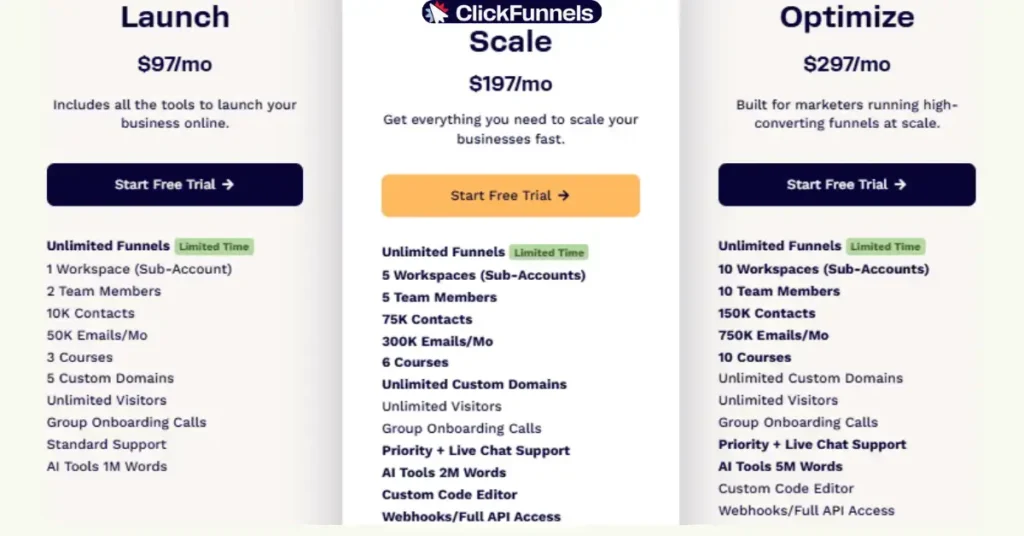
Here’s a comparison table of popular funnel builders. It points out what matters for beginners. It also matches their entry-level plans.
The 2026 public plans set all pricing and limits. These can change.
Beginner Funnel Builder Comparison (Free & Entry-Level Plans)
| Feature | Systeme.io | ClickFunnels | Leadpages | Kartra |
|---|---|---|---|---|
| Free plan | Yes (no credit card) | No (trial only) | No (trial only) | No (trial only) |
| Starting price (paid) | ~$17/month | ~$97/month | ~$49/month | ~$99/month |
| Funnels allowed (entry) | 3 (free), more on paid | Limited by plan | Landing pages only | Limited by plan |
| Email contacts (entry) | Up to ~2,000 (free) | Email costs extra | Requires email tool | ~2,500 |
| Email marketing included | Yes | No (add-on) | Limited | Yes |
| Email automation | Basic rules included | Advanced, paid | Very limited | Advanced |
| Digital product selling | Yes (even free plan) | Yes | No (pages only) | Yes |
| Ease for beginners | Very beginner-friendly | Steep early learning | Easy pages, limited funnels | Powerful but complex |
| Best use case | Learn + grow step by step | Advanced marketers | Lead capture only | Businesses & teams |
At this stage, you’re not choosing a “better” tool. You’re choosing the one that lets you move forward without stress.

Why These Differences Matter for Beginners
Choosing a funnel builder is confusing when you’re just starting out. There are many good tools on the market. There are also many average ones. The problem is not quality. The problem is knowing which tools actually work for beginners.
That’s why this comparison table exists. It gives you a clear, bird’s-eye view of how beginner-friendly each option really is. You don’t have to guess or trust the hype. You can compare pricing, limits, email features, and complexity all at once.
I didn’t know how important an email list would be when I began my affiliate marketing site for beginners. It turned out to be very valuable. At first, I focused only on content. I later saw that an email list helps you reach the same audience over and over. This builds lasting value.
Finding the right tools at the early stage was hard. I spent weeks researching, testing, and switching tools. I started with ConvertKit. It’s a great platform, but I eventually realized it was not ideal for beginners. It felt too advanced for where I was at that time.
For now, I don’t need a perfect or powerful system. I need something simple that works. That’s why a beginner-friendly tool like Systeme.io is enough at this stage. Other tools may make sense later. The goal here is not to choose forever, but to choose what fits your current level.
What beginners should actually focus on in this table
For beginners, the free plan and email limits matter more than advanced automation. Building a real funnel, collecting emails, and sending follow-ups for free eases pressure. It also helps you learn faster.
Pricing jumps are also important. Tools that start at $97 per month or more are often designed for users who already understand funnels. Beginners usually benefit more from lower entry costs and simpler setups.
If email needs a tool or add-on, beginners often struggle. They face problems with integrations and broken flows.
Simple takeaway from the comparison
- If you want to learn funnels without spending money, tools with real free plans matter
- If you only need landing pages, page builders can work
- If you want funnels + email in one place, all-in-one tools are easier
- If you need advanced automation, expect higher cost and complexity
This table is meant to help you choose what fits your current stage, not what looks impressive.
Which Plan Should Beginners Choose?
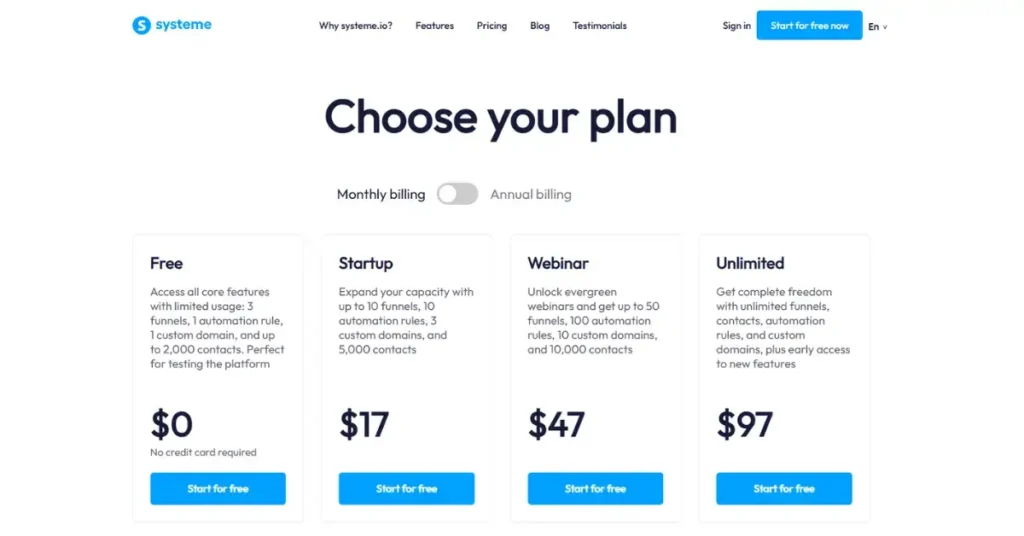
Most beginners don’t need the “best” plan. They need the least risky one.
Start with a free plan if you are learning
If you are still learning how funnels work, start with a real free plan. This allows you to build funnels, collect emails, and test ideas without pressure. It’s the safest way to understand the system before spending money.
For beginners, a free plan works well when your goal is learning, not scaling.
Upgrade only when limits slow you down
A paid plan makes sense only when:
- Your email list is growing close to the free limit
- You want more funnels or automation rules
- You’ve already built and tested at least one funnel
At that point, entry-level paid plans are usually enough. You don’t need advanced features until you’re consistently using the basics.
Simple rule to remember
If you’re unsure which plan to choose, start free.
If you feel blocked by limits, upgrade one level.
That approach keeps your costs low and your progress steady.
If you want to see whether a funnel builder fits you, the easiest way is to try it yourself.
You can start with the Systeme.io free plan and build your first beginner funnel without paying or adding a credit card.
There’s no pressure to upgrade.
You can test funnels, collect emails, and decide later if it’s right for you.
Funnel Builder vs Website Builder for Beginners
This is one of the most common questions beginners ask. That’s usually where beginners get stuck.
When I started, I thought I needed a website, funnels, email tools, and automation all at once. That confusion cost me weeks of progress.

The truth is simple: funnel builders and website builders solve different problems. Understanding that difference early makes your tool choice much easier.
When a Funnel Builder Makes More Sense
A funnel builder focuses on one clear action at a time. It guides visitors step by step to a goal. This could be joining your email list or claiming a free resource. Instead of sending them to many pages, it keeps the process simple.
A funnel builder is usually the better choice if:
- You want to collect emails quickly
- You plan to offer a free checklist or toolkit
- You want simple email follow-ups included
- You don’t want to deal with hosting, themes, or plugins
Many beginners choose tools like Systeme.io. They do this to test ideas without spending money upfront.
When a Website or Blog Is the Better Choice
A website builder is better when your goal is content and long-term growth. Blogs are slower at the beginning, but they can bring traffic for years through Google search.
A website is usually the better option if:
- You want to write blog posts and rank in Google
- You want to build trust with long-form content
- You want a professional online presence
- You’re thinking long term, not just quick tests
Hostinger Website Builder works well for affiliate bloggers focused on SEO traffic. It helps them attract SEO traffic with minimal effort.
Can Beginners Use Both Together?
Yes, and this is often the best long-term setup. A blog attracts traffic. Then, a funnel turns that traffic into email subscribers and offers.
A simple beginner setup looks like this:
- Blog or website for content and SEO
- Funnel builder for email list and lead magnets
I’ve used both in real life. I explain this clearly in my funnel builder vs website builder comparison for beginners, based on real use rather than theory.
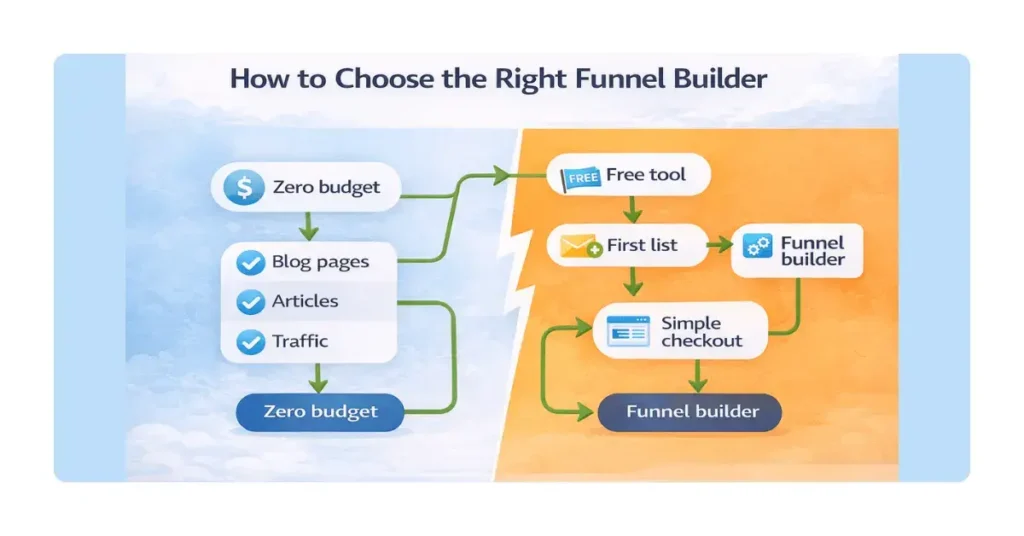
How to Choose the Right Funnel Builder (Decision Helper)
Choosing a funnel builder does not have to feel overwhelming for beginners. You don’t need the “best” tool on the market. You need the right tool for where you are right now. This simple decision helper will point you in the right direction without pressure.
If You Have Zero Budget
If you’re starting with no budget, your first priority should be learning, not scaling. A free plan that allows you to build real funnels and collect emails is the safest place to begin.
At this stage, focus on testing ideas. Understand how funnels work. Get comfortable with simple setups. Many beginners choose a free funnel builder with email features. They do this instead of spending money on several tools right away.
Testing funnels for free eased my fears and kept me consistent.
If You Want Your First Email List
If your main goal is building an email list, choose a funnel builder where email is not an add-on. Email should be part of the same dashboard. This way, you can send a welcome message and simple follow-ups with minimal setup.
Learning to build an email list early gives your traffic a second chance. This is especially true if you want to promote affiliate offers later.
A funnel builder connects landing pages and email through automation. This makes the process much easier.
If You Want to Sell One Product
To sell a simple digital product, skip tools that complicate payments. At the beginner stage, you don’t need advanced checkout flows or upsells.
Look for a funnel builder that allows you to:
- Create a simple sales funnel
- Add a checkout with minimal steps
- Deliver the product automatically
In practice, this matters more than features.
If You Hate Tech or Feel Overwhelmed Easily
If technical setup stresses you out, simplicity matters more than features. Choose a funnel builder with a clean editor, clear tutorials, and fewer decisions to make.
Drag-and-drop pages and ready-made templates help beginners. Step-by-step guides make it easy too. They can move forward with confidence. No need to second-guess each click. Tools that feel simple on day one usually stay manageable as you grow.
One clear tutorial, like a simple step-by-step guide for beginners, works better. Mixing advice from many sources can be confusing.
My Recommendation for Beginners in 2026

If you are just starting out, the best choice is the tool that helps you learn faster without pressure. In 2026, most beginners don’t need advanced automation or complex setups. They need something simple, reliable, and forgiving while they figure things out.
For that reason, Systeme.io is the safest funnel builder for beginners starting out.
It’s not perfect, but it removes enough friction to keep beginners moving.
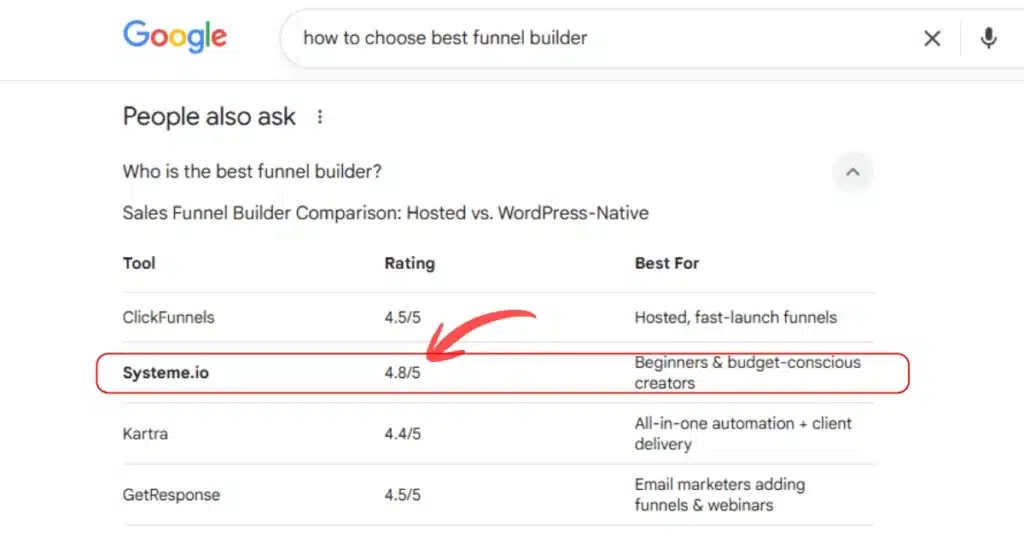
Here, you can see a Rating in Google that I have attached, with Systeme.io receiving 4.8 out of 5, while ClickFunnels has 4.5, Kartra has 4.4, and GetResponse has 4.5. So, you can see that Systeme.io is the most beginner-friendly with a free plan and the highest ratings.
Why this works well for beginners
Systeme.io lets beginners get started for free. You don’t need to link several tools. You can build a simple funnel, collect emails, and send follow-ups from one dashboard.
This removes confusion early.

It’s very helpful if you’re testing affiliate marketing or building a side hustle after work. Limited time and focus can pose challenges. You can learn how funnels and email work together first. Then, you can focus on advanced features later.
For a deeper walkthrough, I documented my Systeme.io beginner setup step by step.
Why it supports both learning and growth
A good beginner tool should not need you to switch platforms before you are ready. With Systeme.io, you can start with one opt-in funnel. Later, you can add email sequences or a simple product when you’re ready.
You are not locked into complex workflows from day one. Growth happens gradually, which is exactly what beginners need.
Who should choose something else
Systeme.io is not the right choice for everyone. You may want to look elsewhere if:
- You want to focus only on blogging and SEO
- You need deep design customization
- You manage clients or multiple brands
- You already use advanced marketing tools
In those cases, a full website platform or a more advanced system may be a better fit.
Final thought before moving on
Systeme.io is not the only option, and it doesn’t need to be. It’s simply the most forgiving place to start for beginners in 2026.
Start Simple (What to Do After You Choose a Tool)
This is the point where many beginners panic. After choosing a tool, they try to build everything at once. Funnels, emails, products, pages, all at the same time. That usually leads to overwhelm and unfinished setups.
At one point, I tried building multiple funnels at the same time. None of them worked. Once I stripped everything down to a single opt-in funnel, things finally started to click. Progress came from finishing something small, not from building something complex.
The smarter approach is to start with one simple funnel and focus on learning how the system works.
First Funnel to Build
Your first funnel should be built around one free resource, not a product. My first funnel didn’t make money, but seeing the first email signup felt like real progress. The goal is to understand traffic, email signups, and follow-up without pressure.
A simple beginner funnel looks like this:
- One landing page offering a free resource
- One email signup form
- One thank-you page
For beginners, a checklist or starter guide works best.
I offer an optional affiliate starter toolkit for beginners that some readers use as a reference when setting up their first funnel.
This type of funnel is easy to build and teaches you the full flow without technical complexity.
First Email to Send
Once someone joins your list, send one simple welcome email. The purpose is not to sell. It’s to deliver what you promised and guide the next small step.
Your first email should:
- Welcome the subscriber briefly
- Deliver the free resource
- Tell them what to expect next
My first email simply delivers the promised resource and explains the next small step. That keeps engagement high and avoids information overload.
First Mistake to Avoid
The biggest mistake beginners make is trying to build too much too soon.
At this stage, finishing matters more than refining.
Final Takeaway for Beginners
If your goal is to start without overthinking, focus on choosing one tool and taking one clear action.
For most beginners in 2026, start with a free funnel builder. This tool lets you test ideas without spending any money. Starting with the Systeme.io free plan is smart. It helps you learn how funnels and email work together before you upgrade.
One clear action step
Create one simple funnel.
Collect your first email.
Send one welcome message.
That’s enough to begin.
If you want extra guidance while setting things up, you can use my affiliate starter toolkit for beginners as a reference. It’s optional and designed to help beginners avoid common setup mistakes, not replace the tool itself.
Optional help: Affiliate starter toolkit for beginners
Frequently Asked Questions
What is a funnel builder, and is it essential for beginners?
A funnel builder shows visitors one clear path. This might be signing up for an email list or claiming a free resource. Beginners find funnel builders helpful. They cut down distractions and help users focus on a single action. This is easier than managing a whole website.
Is a funnel builder better than a website for beginners?
It depends on the goal. Funnel builders are great for collecting emails. They also help test offers on time. Websites are better for blogging and long-term SEO. Many beginners start with a funnel and add a website later.
What should I do if I don’t have a funnel yet?
If you don’t have a funnel, start simple. Create one landing page, connect it to an email signup, and send a welcome email. That’s enough to begin learning how funnels work.
Are there any disadvantages to using a funnel builder?
Yes. Funnel builders often struggle with blogging, advanced design, and complex websites. They are best used for focused actions, not large content sites.
What is the easiest funnel builder for beginners?
Funnel builders for beginners are easy tools. They have simple editors. They offer clear templates. Plus, they have built-in email features. Tools that include a free plan are often easier for beginners to test without pressure.
What are the best free funnel builders for beginners?
The best free funnel builders let beginners make landing pages. They can also collect emails and send basic follow-ups without any cost. Free plans serve the purpose of learning and testing, not full business scaling.
Why do some beginners quit using tools like ClickFunnels?
Many beginners quit advanced tools. They often feel overwhelmed by features, pricing, or setup complexity. These tools are often designed for experienced marketers, not first-time users.
What is a good ClickFunnels alternative for beginners?
A good ClickFunnels alternative for beginners is a simple tool. It costs less and has email features built in. These platforms help beginners learn funnels step by step. They do this without needing to manage many tools.
Systeme.io is popular with beginners. It combines funnels and email marketing in one place. Plus, it has a free plan to help you start learning. Other tools, such as Leadpages, are great for making landing pages. However, they often need a separate email platform.
The right choice depends on whether you want an all-in-one system or just a simple page builder to start with.
Can I use both a website and a funnel together?
Yes. A common beginner setup is using a website or blog for traffic and a funnel for email sign-ups and offers. This approach works well once you understand the basics.